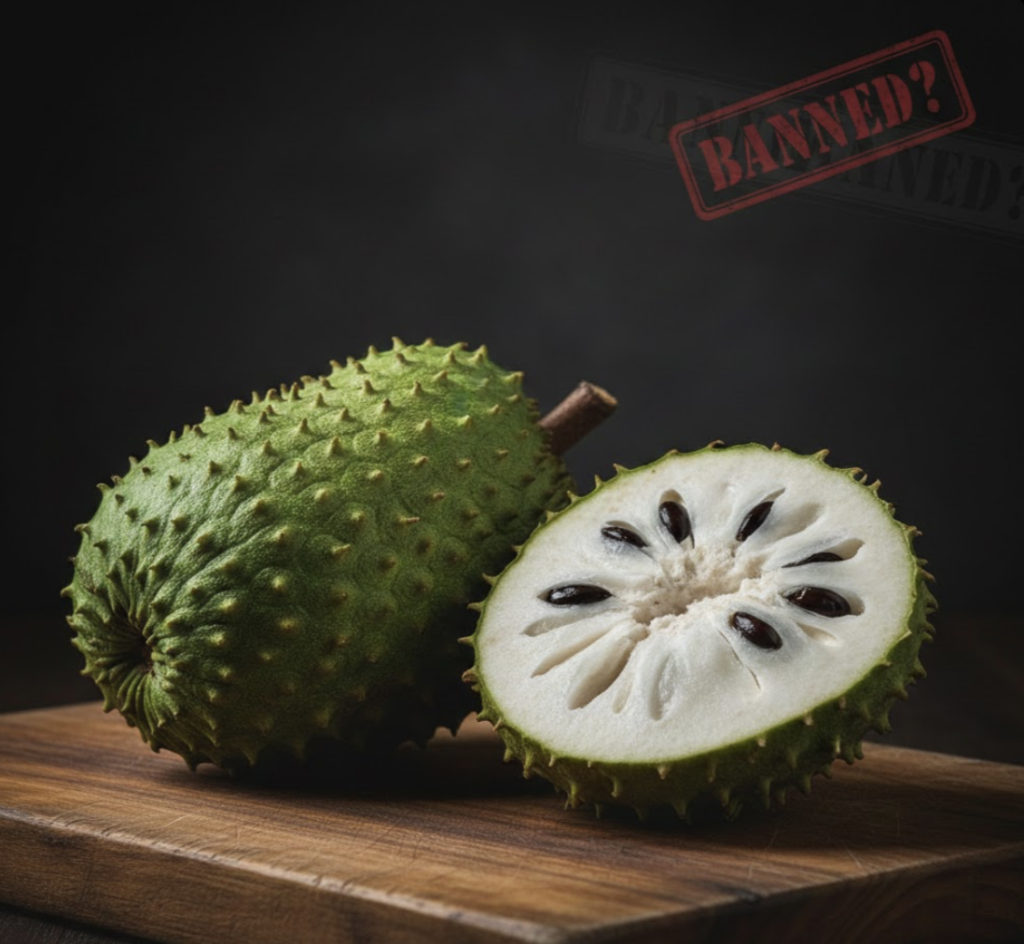
If you’ve ever searched for soursop online, you’ve probably seen some alarming headlines. “Soursop is illegal!” “The FDA banned this fruit!” “Why is graviola restricted?” And honestly? The confusion is real. So let’s cut through the noise and answer the big question: is soursop illegal? The short answer is no. Soursop fruit is completely legal to buy and eat in the United States. But there’s way more to this story, and the truth might actually surprise you.
Where Did the ‘Banned Soursop’ Rumor Come From?
Here’s the thing. The rumor that soursop is illegal didn’t come out of nowhere. There’s actually a grain of truth buried under all the misinformation. And it starts with a specific FDA Import Alert from 1990.
Back then, 34 adults and children got sick after drinking a guanabana drink imported from Mexico. Turns out, the manufacturer had accidentally incorporated toxic material from the fruit seeds into the finished product. The seeds contain high concentrations of compounds called acetogenins, which are harmful when consumed in large amounts. So the FDA created Import Alert 31-03.
But here’s what the internet got wrong. That alert targets specific contaminated products, not the fruit itself. Fresh soursop? Totally legal. Soursop juice made properly? Also legal. The issue was never the fruit. It was one bad batch of a processed drink.
What the FDA Actually Says About Soursop
Let’s be crystal clear about this. The FDA has not banned soursop. What they have done is:
1. Issued warnings about specific imported products that were improperly manufactured
2. Taken action against companies making false medical claims (like saying soursop ‘cures cancer’)
3. Not approved soursop supplements as treatments for any disease
You get it, right? There’s a massive difference between ‘this fruit is illegal’ and ‘you can’t market this as a cancer cure without clinical trials.’ The fruit itself is available at Walmart, Amazon, and specialty grocery stores across the country.
Is Graviola Illegal? Same Fruit, Same Answer
Quick note for clarity: soursop goes by a lot of names. Graviola, guanabana, Brazilian pawpaw, corossol, guyabano. They’re all the same fruit (Annona muricata). So when someone asks ‘is graviola illegal?’ the answer is the same. Nope.
The confusion exists because different regions use different names, and the ‘banned fruit’ myth has spread across all of them. But whether you call it soursop, graviola, or guanabana, you can still buy it legally in the US.
Why Soursop Supplements Face Stricter Rules
Now here’s where things get a bit more nuanced. While the fruit is legal, soursop supplements and extracts face tighter restrictions. Why? A couple of reasons.
First, some companies were making wild claims about soursop curing cancer, diabetes, and other serious diseases without any clinical evidence in humans. The FDA doesn’t play around with that kind of marketing. They’ve sent warning letters and taken legal action against companies making unsubstantiated health claims.
Second, there are legitimate scientific concerns about a compound in soursop called annonacin. Some studies have linked excessive consumption to potential neurological effects. The keyword here is excessive. Moderate consumption of the fruit is generally considered safe by most health authorities.
What Science Actually Says About Soursop
Here’s where it gets interesting. Despite the regulatory caution around health claims, there’s actually a solid body of research on soursop. A systematic review of 49 studies published between 1981 and 2021 found that soursop contains compounds with documented pharmacological activities.
The research showed various properties including anticancer activity (25% of studies), antiulcer effects (17%), antidiabetic potential (14%), antibacterial properties (8%), and more. The key compounds? Acetogenins, alkaloids, flavonoids, and good old vitamin C.
Pretty cool, right? But here’s the important caveat. Most of these studies were done in test tubes or on animals. Human clinical trials are still limited. That’s exactly why the FDA won’t approve health claims. It’s not that soursop isn’t promising. It’s that the science isn’t complete yet.
The Real Reason Some Think Soursop is Banned
Let’s be honest about something. The ‘banned fruit’ narrative makes for great clickbait. Some people believe that soursop is illegal because pharmaceutical companies don’t want you to know about natural alternatives. And while I’m not here to tell you what to believe, I will say this:
The reality is more boring. Soursop isn’t banned because of some conspiracy. It simply hasn’t gone through the expensive, lengthy FDA approval process for medical treatments. That process exists to protect people from unproven ‘cures.’ Whether you think that’s good or bad is up to you.
What we do know is that soursop has been used in traditional medicine across South America, Africa, and Southeast Asia for generations. Indigenous communities have used it for infections, digestive problems, inflammation, and more. That traditional knowledge shouldn’t be dismissed, even if it hasn’t been validated by Western clinical trials.
How to Get Soursop Legally (It’s Easy)
If you want to try soursop, you have options. Fresh soursop is available in tropical regions and specialty grocery stores. Frozen soursop pulp is sold at many supermarkets. And yes, soursop extracts and tinctures are also available, though they tend to be more concentrated.
For those interested in a high-quality soursop extract, 1Ness offers a Soursop Extract for Cell Regeneration made with care and quality in mind. It’s a convenient way to incorporate this traditional botanical into your wellness routine. [Check it out here: https://shop1ness.com/products/soursop-extract-for-cell-regeneration-4oz-glass]
The Bottom Line: Is Soursop Illegal or Not?
Let’s wrap this up clearly. Is soursop illegal? No. Fresh soursop fruit is legal. Properly manufactured soursop products are legal. The FDA hasn’t banned soursop.
What is restricted? Making specific health claims without clinical evidence. Marketing soursop as a cure for cancer or other diseases without FDA approval. And certain contaminated imported products (not the fruit itself).
The ‘banned fruit’ story is mostly myth mixed with a little misunderstood truth. Soursop is a legitimate tropical fruit with a long history of traditional use and promising (though incomplete) scientific research. You can buy it, eat it, and enjoy it.
Just don’t expect the FDA to tell you it cures anything. That’s not how this works. And honestly? That’s probably okay. Sometimes the best approach is to make your own informed decisions based on the best available information.
Want to stay informed about natural health topics and get exclusive deals? Subscribe at www.be1ness.com for updates, education, and special offers from the 1Ness team.
═══════════════════════════════════════════
Frequently Asked Questions About Soursop Legality
Is soursop illegal in the United States?
No, soursop is not illegal in the United States. Fresh soursop fruit and properly manufactured soursop products are legal to buy and consume. The FDA has issued warnings about specific contaminated products and companies making false health claims, but the fruit itself is not banned.
Why does the FDA have an import alert on soursop?
The FDA’s Import Alert 31-03 was created in 1990 after a contaminated guanabana drink from Mexico made people sick. The issue was improper manufacturing that included toxic seed material, not the fruit itself. The alert targets specific problematic products, not all soursop.
Is graviola the same as soursop?
Yes, graviola and soursop are the same fruit (Annona muricata). Other names include guanabana, Brazilian pawpaw, corossol, and guyabano. The legal status is the same regardless of which name is used.
Can I buy soursop at regular stores?
Yes, soursop products are available at many retailers including Walmart, Amazon, and specialty grocery stores. Fresh soursop may be harder to find outside tropical areas, but frozen pulp, juices, and extracts are widely available.
Are soursop supplements legal?
Soursop supplements are legal to sell, but they cannot be marketed as treatments for specific diseases without FDA approval. Companies that claim soursop cures cancer or other conditions face regulatory action. The supplements themselves are not banned.
Is it safe to eat soursop?
Fresh soursop fruit is generally considered safe when consumed in moderation. The seeds should not be eaten as they contain higher concentrations of potentially harmful compounds. As with any supplement or food, consult your healthcare provider if you have concerns.