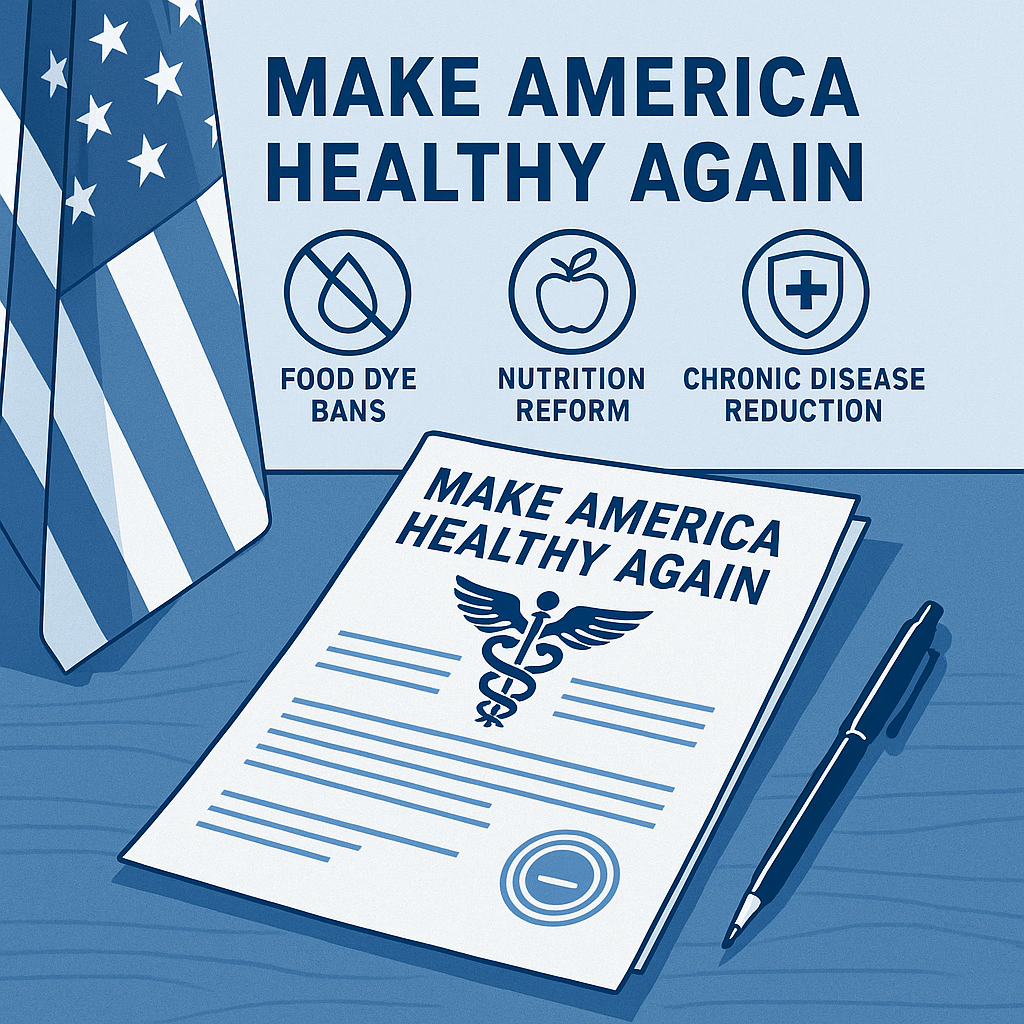
Is America getting healthier, or is the Make America Healthy Again movement just generating headlines? That’s the question worth asking now that MAHA has moved from campaign slogan to federal policy. Secretary Kennedy promised to tackle chronic disease, clean up the food supply, and take on pharmaceutical and food industry influence. Big promises. But what’s actually happening? Let’s look at MAHA’s stated goals and measure them against real evidence, what’s working, what’s stalled, and what’s still too early to call.
What MAHA Actually Set Out To Do
President Trump signed Executive Order 14212 in February 2025, establishing the Make America Healthy Again Commission. The mission statement is clear: end the childhood chronic disease epidemic. The commission identified five key drivers they’re targeting, poor diet, exposure to environmental chemicals, lack of physical activity, chronic stress, and what they call ‘overmedicalization.’ This isn’t about infectious disease or healthcare access. MAHA is specifically focused on chronic conditions: obesity, diabetes, heart disease, autoimmune disorders, and childhood developmental issues. So that’s the lens we should use to evaluate it.
Synthetic Food Dyes: Real Progress
This is MAHA’s clearest win. The FDA banned Red Dye No. 3 in January 2025, a synthetic colorant linked to thyroid cancer in lab rats that regulators should’ve removed thirty years ago. By April, HHS announced plans to phase out six more petroleum-based dyes (Red 40, Yellow 5, Yellow 6, Blue 1, Blue 2, Green 3) by the end of 2027.
The food industry responded faster than expected. Roughly 35% of major food companies have now committed to removing synthetic dyes, including Kraft Heinz, General Mills, Hershey, Nestle, PepsiCo, Tyson, and J.M. Smucker. Kraft Mac & Cheese actually switched to natural colorants back in 2016, but the broader industry timeline accelerated dramatically under MAHA pressure.
The caveat: This is voluntary compliance. Eight of the top 24 food manufacturers have made zero commitments. Mars backed out of a 2016 pledge to remove dyes. General Mills removed dyes in 2015, then brought them back in 2017 after consumer complaints. Without regulatory enforcement, there’s no guarantee these promises stick. The Center for Science in the Public Interest is pushing for actual FDA regulations rather than ‘understandings.’
State-Level Reforms: Moving Faster Than Federal
While federal agencies debate, states are acting. Twelve states now have USDA-approved SNAP waivers restricting purchases of candy and sugary drinks: Arkansas, Colorado, Florida, Idaho, Indiana, Iowa, Louisiana, Nebraska, Oklahoma, Texas, Utah, and West Virginia. Eight states have banned synthetic dyes from school meals: Arizona, Delaware, Louisiana, Tennessee, Texas, Utah, Virginia, and West Virginia.
Texas passed a law requiring warning labels on products containing certain additives starting in 2027. California’s School Food Safety Act bans six synthetic dyes from school foods. West Virginia went furthest, banning the sale of any food product containing seven synthetic dyes statewide.
Twenty-two states now restrict cell phone use in schools, a mental health measure the MAHA commission endorsed. This decentralized approach is actually producing faster results than waiting for federal regulation. Whether you view that as federalism working or patchwork chaos depends on your politics.
Obesity Rates: First Decline in Years
Here’s a stat that matters: for the first time in this dataset’s history, the number of states with adult obesity rates at or above 35% dropped, from 23 states to 19. National adult obesity sits at 40.3%, still dangerously high, but the trend line finally shifted direction.
How much credit does MAHA deserve? Probably not much yet, these changes take years to show up in population data. GLP-1 medications like Ozempic and Wegovy deserve significant credit. Gallup data shows obesity rates declining most in the 40-64 age groups, which also show the highest GLP-1 usage. Increased awareness about ultra-processed food harms likely plays a role too.
The concern: Rural obesity rates are still climbing (48.3% in rural areas vs. 42.1% urban), and childhood obesity remains at 21.3% for ages 2-19. If MAHA’s chronic disease focus is going to move the needle, these numbers need to change over the next 3-5 years.
The CDC’s latest obesity statistics confirm this shift in trends.
Source: https://www.cdc.gov/obesity/adult-obesity-facts/?CDC_AAref_Val
What’s Stalled or At Risk
The GRAS Loophole: Still Open
MAHA promised to close the ‘Generally Recognized as Safe’ loophole that lets food companies add new chemicals without FDA approval. As of now, it’s still open. HHS announced in March they’d ‘examine ways’ to address it, but no concrete action has followed. Thousands of additives have entered the food supply through this loophole without independent safety evaluation. Closing it would be a significant win, but it hasn’t happened.
Budget Cuts vs. Health Goals
Here’s the tension: HHS proposed cutting its own budget by over 25%. You can’t simultaneously promise to revolutionize American health while gutting the agencies responsible for food safety, nutrition research, and chronic disease prevention. The appropriations bill that ended the 2025 government shutdown actually included provisions eliminating rules preventing foodborne illness, which critics noted directly contradicts MAHA’s stated mission.
Voluntary Compliance Has Limits
The food dye phase-out depends entirely on voluntary industry action. FDA hasn’t issued binding regulations. Companies can make announcements, generate goodwill, then quietly backtrack, as General Mills and Mars have done before. Without enforcement mechanisms, MAHA’s food reform agenda relies on sustained public pressure and companies deciding to follow through. History suggests that’s a gamble.
So Is America Actually Getting Healthier?
Based on MAHA’s own goals, here’s the honest scorecard:
Working: Red Dye 3 banned. Major food companies committing to remove synthetic dyes. States implementing SNAP restrictions and school food reforms faster than federal government. Obesity rates showing first decline.
Stalled: GRAS loophole still open. No binding FDA regulations on remaining dyes. Budget cuts threaten enforcement capacity. Rural and childhood obesity still climbing.
Too early to measure: Chronic disease rates (diabetes, heart disease, autoimmune conditions). These take years to shift at the population level. Check back in 2028.
The MAHA movement has successfully put chronic disease and food quality on the national agenda. That conversation needed to happen. But conversation isn’t the same as results, and relying on voluntary compliance while cutting enforcement budgets is a structural contradiction that hasn’t been resolved.
January 2026 Update: New Dietary Guidelines Flip the Food Pyramid
On January 7, 2026, the U.S. Department of Health and Human Services and the U.S. Department of Agriculture released the Dietary Guidelines for Americans, 2025-2030. The update represents a significant departure from previous federal nutrition guidance.
What Changed
The guidelines introduced an inverted food pyramid—the first return to a pyramid graphic since 2011, when the Obama administration replaced it with MyPlate.
Key recommendations:
- Protein prioritized: Daily protein intake increased from 0.36 grams per pound of body weight to 0.54-0.73 grams per pound. Animal proteins (eggs, poultry, seafood, red meat) and plant proteins (beans, lentils, nuts, seeds, soy) are both emphasized.
- Full-fat dairy recommended: Three servings per day of dairy products, including whole milk, yogurt, and cheese—reversing the previous low-fat and fat-free recommendations.
- Ultra-processed foods targeted: For the first time, the guidelines explicitly call out highly processed foods as harmful, advising Americans to “avoid highly processed packaged, prepared, ready-to-eat, or other foods that are salty or sweet.”
- Added sugars eliminated: The guidance states “no amount of added sugars or non-nutritive sweeteners is recommended or considered part of a healthy diet.” No meal should contain more than 10 grams (about 2 teaspoons) of added sugar.
- Healthy fats emphasized: Fats from whole food sources (meats, eggs, seafood, nuts, seeds, full-fat dairy, olives, avocados) are prioritized. Olive oil, butter, and beef tallow are listed as cooking options.
- Whole grains reduced in prominence: Positioned at the bottom (smallest portion) of the inverted pyramid, with 2-4 daily servings recommended. Refined carbohydrates (white bread, crackers, flour tortillas) are explicitly targeted for reduction.
- Alcohol guidance changed: Previous specific limits (one drink for women, two for men) replaced with broader guidance to “consume less alcohol for better health.”

Old vs. New: The Food Pyramid Comparison
| Category | MyPlate (2011-2025) | New Pyramid (2026) |
| Visual format | Circular plate divided into sections | Inverted triangle (widest at top) |
| Top priority | Fruits and vegetables (half the plate) | Protein, dairy, healthy fats, vegetables, fruits (equal prominence) |
| Grains | Quarter of the plate, any grains | Bottom of pyramid (smallest), whole grains only |
| Dairy | Side portion, low-fat/fat-free preferred | Top tier, full-fat recommended |
| Protein | Quarter of the plate, lean meats emphasized | Top tier, all sources including red meat |
| Fats | Not prominently featured | Elevated to top tier alongside protein |
| Processed foods | Not specifically addressed | Explicitly discouraged |
| Added sugars | Limited to 10% of calories | “No amount recommended” |
Original Food Pyramid (1992)
The original USDA pyramid introduced in 1992 had four levels:
- Bottom (largest): 6-11 servings of bread, cereal, rice, pasta
- Second tier: 3-5 servings vegetables, 2-4 servings fruits
- Third tier: 2-3 servings dairy, 2-3 servings meat/protein
- Top (smallest): Fats, oils, sweets — “use sparingly”
New Food Pyramid (2026)
The inverted pyramid flips this structure:
- Top (largest): Protein, dairy, healthy fats alongside vegetables and fruits
- Bottom (smallest): Whole grains
What It Means for Federal Programs
The Dietary Guidelines serve as the foundation for federal nutrition programs. Changes will affect:
- School breakfast and lunch programs
- Military and veteran meals
- SNAP (Supplemental Nutrition Assistance Program) guidance
- WIC (Women, Infants, and Children) food packages
- Child and adult care food programs
- Senior nutrition programs
Eighteen states will now restrict SNAP purchases of candy and sugary drinks in 2026, building on waivers approved by USDA.
Responses and Concerns
Support:
- The International Dairy Foods Association praised the full-fat dairy recommendations
- The National Turkey Federation and beef industry groups supported the protein emphasis
- Western Growers Association endorsed the vegetable recommendations
Concerns raised:
- The American Heart Association cautioned against high-fat animal products while supporting vegetable and whole grain recommendations
- Harvard T.H. Chan School of Public Health questioned the visual emphasis on red meat and saturated fat sources while noting the guidelines technically maintain the 10% saturated fat limit
- The Center for Science in the Public Interest criticized the protein emphasis as potentially harmful, noting financial ties between some guideline reviewers and the beef/dairy industries
The Numbers Behind the Change
The guidelines cite these statistics driving the reset:
- 90% of U.S. healthcare spending goes toward treating chronic disease
- 70%+ of American adults are overweight or obese
- Nearly 1 in 3 adolescents has prediabetes
- 77% of military-aged youth are ineligible for service, primarily due to diet-related conditions
- The U.S. spends 2.5x more per capita on healthcare than comparable developed nations
- U.S. life expectancy is 4 years lower than the OECD average
State-Level Momentum Continues
In addition to the federal guidelines, state activity has accelerated:
- 18 states will restrict SNAP purchases of candy and sugary drinks in 2026
- California set a legal definition for ultraprocessed foods and will phase them out of schools
- San Francisco sued major food companies in December 2025, accusing them of selling “harmful and addictive” products
- $50 billion Rural Health Transformation Program offers incentives to states implementing MAHA-aligned policies
Source: Official Dietary Guidelines available at realfood.gov. Additional sources: HHS.gov, USDA.gov, CDC obesity statistics, KFF Health News, CNN, NPR.
Taking Your Health Into Your Own Hands
Here’s what we know for certain: waiting for policy to fix your health isn’t a strategy. Whether MAHA delivers on its promises or stalls out, your daily choices matter more. That means reading labels, questioning what goes into your body, reducing processed food intake, and exploring natural wellness options that support how your body actually functions.
At 1Ness, we believe in personal responsibility over institutional dependency. Our herbal extract tinctures, including Mullein for respiratory support and Soursop for cellular health, represent the kind of personal empowerment that doesn’t depend on which party controls HHS. Clean water, natural remedies, informed choices. That’s the foundation no policy can take away.
Explore our Wellness & Tinctures collection: https://shop1ness.com/collections/wellness
Subscribe for exclusive updates and savings: www.be1ness.com
Frequently Asked Questions
What is the new food pyramid for 2026?
The 2025-2030 Dietary Guidelines introduced an inverted pyramid with protein, dairy, healthy fats, vegetables, and fruits at the widest top section, and whole grains at the narrow bottom. It replaces MyPlate, which was used from 2011-2025.
How much protein do the new guidelines recommend?
The guidelines increased daily protein recommendations from 0.36 grams per pound of body weight to 0.54-0.73 grams per pound. For a 150-pound person, this equals approximately 81-109 grams of protein daily.
Are full-fat dairy products now recommended?
Yes. The 2026 guidelines recommend three daily servings of dairy including whole milk, yogurt, and cheese—reversing previous guidance that emphasized low-fat or fat-free options.
What happened to the saturated fat limit?
The 10% of daily calories limit for saturated fat remains in place, though the visual pyramid emphasizes foods higher in saturated fat (red meat, butter, full-fat dairy). How to stay within the limit while following the pyramid’s visual emphasis has been questioned by nutrition experts.
When will the new dietary guidelines affect school lunches?
Implementation timelines vary by program. Federal feeding programs (school meals, military meals, WIC, SNAP) will update their requirements based on the new guidelines throughout 2026 and beyond.
This post is for informational purposes only and not a substitute for professional medical advice. Sources include CDC, FDA, HHS official releases, TFAH State of Obesity Report 2025, and major news outlets. Questions? Text or call us at 818-213-2927.
These statements have not been evaluated by the Food and Drug Administration. This article is for general information and education only. It is not medical advice, and no product sold by 1Ness is intended to diagnose, treat, cure or prevent any disease. Research discussed here is preliminary and largely laboratory based. Always speak with a qualified healthcare provider about your own situation, and never delay or replace treatment recommended by your doctor.