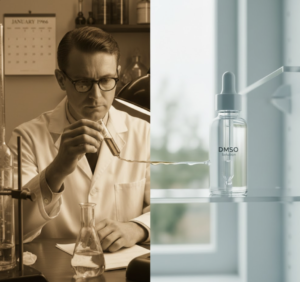
Here’s a mistake I see all the time. Someone discovers DMSO, gets excited about its potential, orders the first product they find, and then wonders why it’s not working as well as they expected. The problem? They picked the wrong format. When it comes to DMSO cream vs gel vs liquid, the differences aren’t just cosmetic. They fundamentally affect how fast the product absorbs, how effectively it penetrates your skin, and whether you’re getting your money’s worth. So let’s break this down properly.
Why DMSO Format Actually Matters
DMSO (dimethyl sulfoxide) has one superpower that makes it different from every other topical product out there. It penetrates skin. Fast. And it can carry other substances with it. This is why DMSO has been studied for everything from pain relief to wound healing to carrying medications deeper into tissues.
But here’s what most people miss. The format you choose directly impacts that penetration ability. A cream, a gel, and a liquid don’t behave the same way on your skin. They have different bases, different absorption rates, and different ideal use cases. Choosing wrong doesn’t just mean slower results. It can mean no results.
DMSO Cream: The Slow Option
Let’s start with DMSO cream because, honestly, it’s the format that causes the most disappointment. DMSO cream is typically oil-based. That means it contains emulsifiers, stabilizers, and other additives to create that smooth, lotion-like texture people expect from skincare products.
The problem? Those oils create a barrier. They sit on top of your skin. And that directly slows down DMSO’s absorption, which is literally the whole point of using DMSO in the first place.
Issues with DMSO cream:
• Slower absorption rate due to oil-based formula
• Additional ingredients that may compromise purity
• Oils can go rancid over time, reducing shelf life
• Often lower DMSO concentration to achieve cream consistency
• May leave greasy residue on skin
If you need quick relief, cream is probably not your best bet. It has its place for certain applications, but understand its limitations before you buy.
DMSO Gel: The Middle Ground
Now we’re getting somewhere. DMSO gel is typically water-based, which makes a huge difference in how it interacts with your skin. Water-based formulas don’t create the same barrier that oil-based creams do. They absorb faster and more completely.
Gels also have a thicker consistency than liquid, which makes them easier to apply to specific areas. If you’re targeting a knee, an elbow, or a particular sore spot, gel stays where you put it instead of running all over the place. This makes it ideal for localized application.
Advantages of DMSO gel:
• Water-based formula for faster absorption than cream
• Thicker consistency for targeted application
• Longer shelf life (less prone to oxidation)
• Often includes soothing agents like aloe vera
• Less messy than liquid for most users
Many practitioners recommend starting with a 70% DMSO gel with aloe vera for beginners. The aloe helps soothe any potential skin irritation, and the gel format is forgiving for those still learning how to use DMSO properly.
DMSO Liquid: Maximum Potency, Maximum Control
Pure liquid DMSO is the most potent and versatile option. It absorbs rapidly, often within minutes. It gives you complete control over concentration because you can dilute it yourself. And it’s the preferred choice for experienced users and practitioners who know exactly what they’re doing.
The trade-off? Liquid DMSO requires more care. It’s thin, so it spreads easily. It needs to be diluted for most applications (99.9% pure DMSO applied straight to skin can cause irritation). And because DMSO carries substances through your skin, you need to be absolutely certain your skin is clean before application.
When to choose liquid DMSO:
• You want maximum purity with no additives
• You need to control the exact concentration
• You’re covering larger areas
• You’re mixing DMSO with other substances (under guidance)
• You’re an experienced user comfortable with proper handling
For those seeking pharmaceutical-grade purity, 1Ness offers a 99.995% pure DMSO in a dark-tinted glass bottle specifically designed for quality storage. No additives, no fillers, just clean DMSO trusted by wellness professionals nationwide.
👉 Get 1Ness Pharmaceutical-Grade DMSO here: https://shop1ness.com/products/dimethyl-sulfoxide-dmso-4oz-glass
DMSO Cream vs Gel: The Direct Comparison
Since so many people get stuck deciding between DMSO cream vs gel, let me make this really simple:
Choose gel if: You want faster absorption, better penetration, and a product that doesn’t leave oily residue. Gel is almost always the better choice for therapeutic use.
Choose cream if: You prefer a familiar lotion-like texture and don’t mind slower absorption. Some people find creams more comfortable for general moisturizing applications, but this somewhat defeats the purpose of DMSO.
Here’s the bottom line. If your goal is to actually get DMSO into your tissues where it can do its job, gel beats cream almost every time. The water-based formula just works better with DMSO’s natural penetration abilities.
What About Roll-Ons and Sprays?
You might also see DMSO in roll-on or spray formats. These are basically liquid DMSO with convenient application methods. Roll-ons are popular among athletes and people with active lifestyles because they’re mess-free and portable. Sprays allow you to cover larger areas quickly.
The formula inside is usually the same as standard liquid DMSO, just packaged differently. These can be great options if convenience is a priority, but always check the concentration and purity before buying.
Concentration Matters More Than You Think
Here’s another mistake people make. They assume higher concentration always means better results. Not true. Research suggests that DMSO effectiveness doesn’t necessarily increase above 70-80% concentration, but skin irritation definitely does.
Most practitioners recommend a 70% DMSO solution for general topical use. If you’re buying pure 99.9% liquid DMSO, you’ll want to dilute it with distilled water before applying. A common ratio is 70% DMSO to 30% distilled water.
Pre-made gels often come in this optimal range already, which is another reason they’re good for beginners. You don’t have to worry about getting the dilution right.
Purity: The Factor Most People Ignore
Let’s talk about something that should terrify you a little. DMSO pulls substances through your skin and into your bloodstream. That’s its superpower. But it also means that anything on your skin goes in too.
This is why purity matters enormously with DMSO. Industrial-grade DMSO can contain impurities that you absolutely do not want absorbed into your body. Always look for pharmaceutical-grade or USP-certified DMSO. And always, always apply to clean, dry skin.
Packaging matters too. DMSO can leach chemicals from certain plastics. That’s why quality DMSO comes in glass bottles, not cheap plastic containers. If your DMSO is in a flimsy plastic bottle, that’s a red flag.
How to Choose the Right DMSO Format for You
Let me make this as straightforward as possible:
New to DMSO? Start with a 70% gel with aloe vera. It’s forgiving, easy to apply, and the aloe helps prevent skin irritation while you learn how your body responds.
Targeting specific spots? Gel is your friend. It stays where you put it and delivers concentrated application to problem areas like joints, muscles, or tendons.
Want maximum control and purity? Go with pharmaceutical-grade liquid DMSO. Dilute it yourself and know exactly what you’re getting. This is the choice for experienced users and practitioners.
Need convenience on the go? Roll-ons offer mess-free application and portability. Great for travel or keeping at work.
Avoid cream unless you have a specific reason for the slower absorption rate or you simply prefer the texture for non-therapeutic applications.
The Bottom Line on DMSO Formats
Choosing the wrong DMSO format isn’t just an inconvenience. It can mean the difference between a product that works and one that sits on your skin doing nothing. When comparing DMSO cream vs gel vs liquid, remember:
• Cream = slowest absorption, oil-based barrier, shortest shelf life
• Gel = faster absorption, water-based, great for targeted application
• Liquid = fastest absorption, maximum purity, requires proper dilution
For most people, gel or properly diluted liquid will deliver the best results. Whichever you choose, prioritize purity, use glass packaging, and always apply to clean skin.
Ready to try pharmaceutical-grade DMSO? The 1Ness 99.995% Pure DMSO is USP-certified, made in the USA, and packaged in protective dark glass. No additives. No fillers. Just results.
👉 Shop 1Ness DMSO: https://shop1ness.com/products/dimethyl-sulfoxide-dmso-4oz-glass
Want to stay informed about natural health topics and get exclusive deals? Subscribe at www.be1ness.com for updates, education, and special offers from the 1Ness team.
═══════════════════════════════════════════
Frequently Asked Questions About DMSO Formats
(FAQ Schema Ready)
Is DMSO gel better than DMSO cream?
For most therapeutic purposes, yes. DMSO gel is water-based and absorbs faster than oil-based creams. Cream creates a barrier that slows down DMSO’s natural penetration ability. Gel is generally the better choice for targeted relief.
What concentration of DMSO should I use?
Most practitioners recommend 70% DMSO for topical use. Higher concentrations don’t necessarily work better but do increase the risk of skin irritation. If using pure 99.9% liquid DMSO, dilute it with distilled water to 70% before applying.
Why does DMSO need to be in a glass bottle?
DMSO can leach chemicals from certain plastics. Glass bottles prevent this contamination and preserve the product’s purity. Always look for DMSO packaged in glass, preferably dark-tinted to protect against UV degradation.
Can I mix DMSO with other products?
Yes, but with caution. DMSO carries substances through your skin, so anything you mix with it will also be absorbed. Only combine DMSO with pure, natural products and always consult with a healthcare provider before mixing with medications.
Why does DMSO cause a garlic smell?
When DMSO is absorbed, your body metabolizes it into dimethyl sulfide (DMS), which has a garlic-like odor. This is excreted through breath and skin. It’s harmless and temporary, usually fading within a day or two after you stop using DMSO.
Is liquid DMSO better than gel?
Liquid DMSO offers maximum purity and control but requires proper dilution and more careful handling. Gel is more convenient and beginner-friendly. Neither is universally ‘better’—it depends on your experience level and specific needs.