Quick answer. Soursop (Annona muricata, called guanabana in Spanish and graviola in Portuguese) is a fruit and a leaf that families in Colombia and the Caribbean have used for generations to support digestion. A resting squat is the position the body was built to go in: two studies in healthy adults found people felt done faster and strained less in a squat-like position than on a seat. Put the two together with a stretch and you have a four-minute morning ritual. The free 6-Day Soursop Plan writes out all six mornings. Email only, no card, no subscription.
Get the free 6-Day Soursop Plan
Your grandmother did not go to the bathroom in a chair. For most of human history nobody did. People squatted, in a field, over a hole, on a low stool. The seated toilet is a recent habit, and it folds the body at an angle it was never built to go in.
This article covers three things: what two studies found about posture and going, what soursop has been used for where it grows, and a three-step morning ritual, squat, sip, stretch, that you can start tomorrow for free.
What do the studies say about squatting?
Two studies get quoted a lot. Here is what they found, in plain words.
Sikirov, 2003. Twenty-eight healthy adults, ages 17 to 66, used a timer to record how long it took to feel done in three setups: a standard toilet seat, a lower seat, and a full squat, six visits in each. Squatting cut both the time and the straining for every one of them. In the paper’s own words, both “were reduced sharply in all volunteers.” The abstract prints no times in seconds, so neither do we. (Digestive Diseases and Sciences, 2003, volume 48, pages 1201 to 1205.)
Modi and colleagues, 2019. Fifty-two healthy adults, average age 29, logged 1,119 bathroom visits over four weeks: two weeks sitting as usual, then two weeks with a footstool that raises the knees into a squat-like position. With the stool they were 3.6 times as likely to report feeling fully empty, and the odds of a straining pattern dropped to about a quarter. Visits were also shorter: 5.6 minutes on average without the stool, 4.2 with it. Before the study began, 44 percent of these healthy young adults reported straining and 29 percent reported not feeling done. Two thirds said they planned to keep using the stool. (Journal of Clinical Gastroenterology, 2019; free full text at PubMed Central, PMC6382038.)
The wider view. A 2025 review in BMC Public Health pooled 42 studies on toilet posture. Its reading: squatting may ease the effort and help people empty more fully, and the studies are small with weak controls, so nobody should call it settled. Fair enough. The position costs nothing, takes a minute, and the downside for a healthy adult is close to zero.
A squat is a position, not a treatment. If you have ongoing trouble going, pain, or blood, that is a conversation for your doctor.
Why a resting squat and not just a footstool?
A footstool at the toilet gets you most of the way, and if you want one, get one. A short resting squat each morning does something the stool does not: it moves the hips, the lower back and the belly muscles that sit still all day. Many people find that a minute in a comfortable squat first thing, before coffee, is when the body wakes up.
How to do it safely matters more than how deep you go.
- Comfortable depth. Halfway down is fine. Deeper comes with time, or never, and that is fine too.
- Heels down. If your heels lift, put a folded towel or a book under them. Most adults need it at first.
- Hold something. A doorframe, a counter edge, a chair back. You are resting, not balancing.
- Sixty seconds, then stand. Never as long as you can. One minute, rest, done.
- Stop at pain. Sharp pain in a knee, hip or back means stand up. Skip the squat if you have a knee or hip injury, a recent surgery, or are in late pregnancy, and ask your doctor first if you are unsure.
What has soursop been used for?
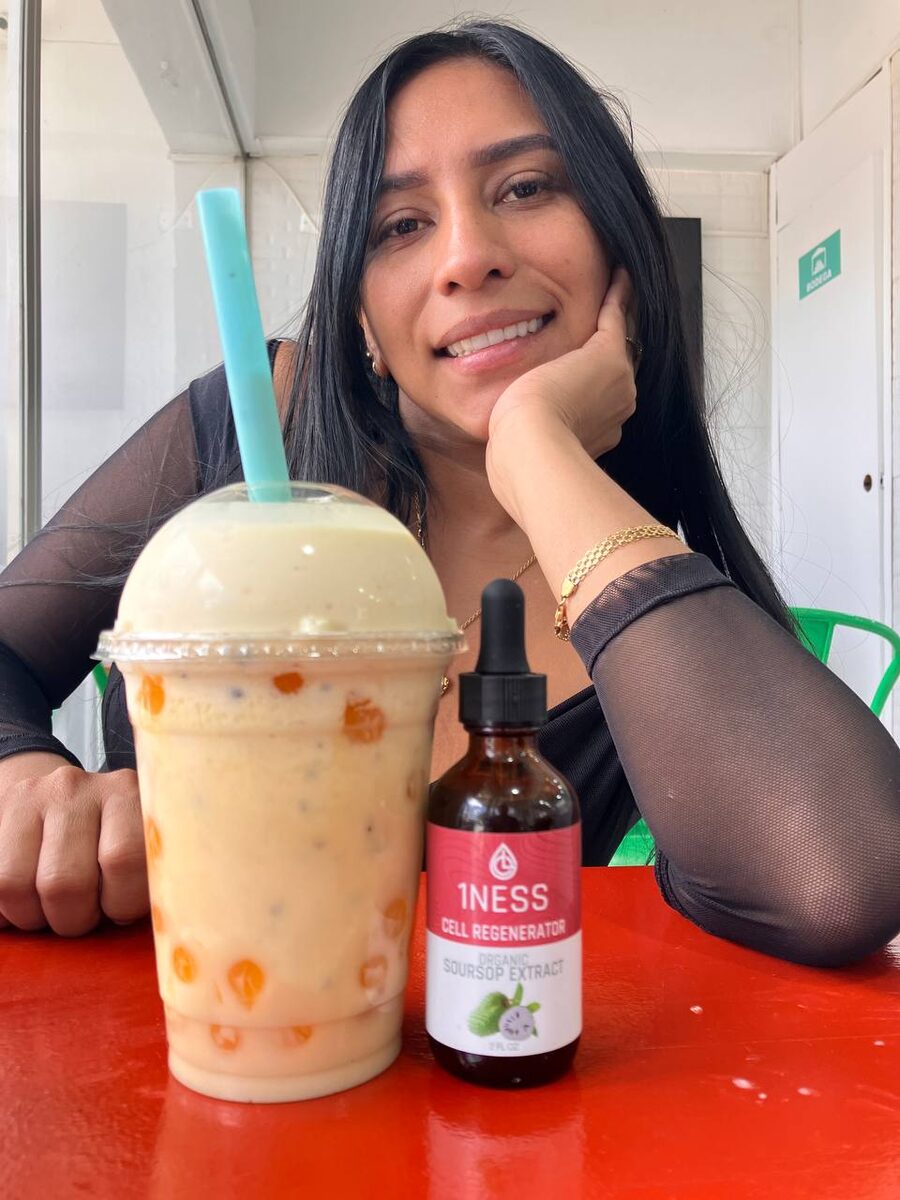
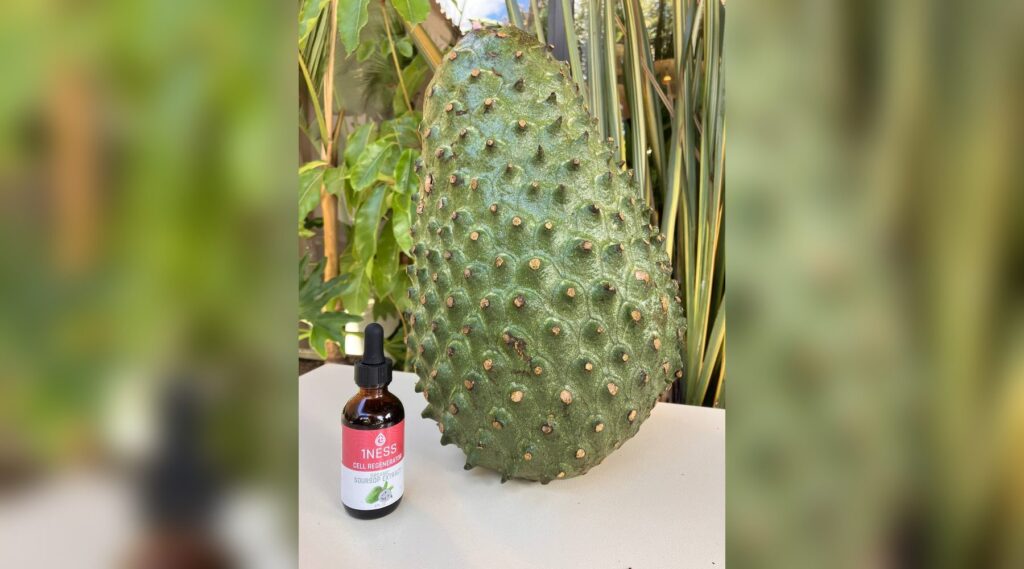
Soursop grows across Colombia, the Caribbean, Mexico and parts of Africa and Asia. Where it grows it is ordinary food: the fruit eaten fresh or blended into juice, the leaves steeped as a tea, both used in the kitchen for generations to support digestion and settle the stomach. In Colombia it is sold as ice cream on an ordinary street.
One of our customers, Ginette, wrote in her review: “Both my husband and I started taking these soursop drops, as we have been familiar with the fruit and it’s benefits from our youth… we have our adult children now taking it on a regular basis.”
Our soursop fruit and leaf extract is the two together: 2,500 mg in one full dropper. The fruit and leaf are bought from local farmers in Colombia, freeze-dried, then steeped for three weeks in Dallas, Texas, in a base of organic vegetable glycerin and distilled water. No alcohol. Six ingredients on the label, counting the base: soursop fruit and leaf, curcumin extract, black pepper, chlorophyll, glycerin, water, with the amount printed beside each of the four actives.
Before you start:
- Taste. A little sour, a little green, closer to the fruit than to bitters. In a glass of water or warm tea it is easy. People who quit bitters over the taste are usually surprised.
- Amount. One full dropper a day, in the morning, in a full glass of water. If your stomach is touchy first thing, take it with breakfast. Our article on how many soursop drops to take a day covers how to go up from there.
- Time. Give it six days and keep the three-line log below. Judge by your own notes.
- Who should ask first. If you are pregnant or nursing, take blood pressure, blood sugar or blood thinner medication, or have a nerve or movement condition, talk to your doctor before adding soursop. Our soursop side effects article goes through each one plainly. If anything feels off, stop and ask.
Why is soursop illegal?
It is not. Our site shows up for this exact search more than 1,600 times a month, so here is the answer. Three true things sit behind the rumor.
- An FDA import alert on soursop drinks. Import Alert 31-03 dates to June 1990, when 34 people got sick within minutes of drinking an imported guanabana drink. Later testing found seed material in some packaged soursop products. Soursop seeds are not edible. The alert covers drinks, juices, nectars and packaged pulp from listed firms. It is not a ban on the plant. Our extract is made from the fruit pulp and the leaf; seeds are not part of it.
- Rules on fresh fruit, for plant pests. Until late 2024, Grenada was the only country allowed to ship fresh soursop to the United States, about 256 tons a year on average from 2017 to 2023. In October 2024 the USDA added Mexico, with the fruit irradiated for fruit flies before it comes in. That is pest control, and it is why fresh soursop is hard to find in a US grocery store.
- FDA warning letters in 2017. In 2017 the FDA sent warning letters to companies selling products with illegal disease-treatment claims; by that November the FDA’s own list stood at 18 letters covering more than 80 products. One of those companies sold soursop capsules, tea bags and leaves. The sellers’ claims were the problem, and that is why the word “illegal” sticks to the plant. We do not make those claims, and nobody honest should.
Our article on why people think soursop is illegal goes through the border rules in detail.
The morning ritual: squat, sip, stretch
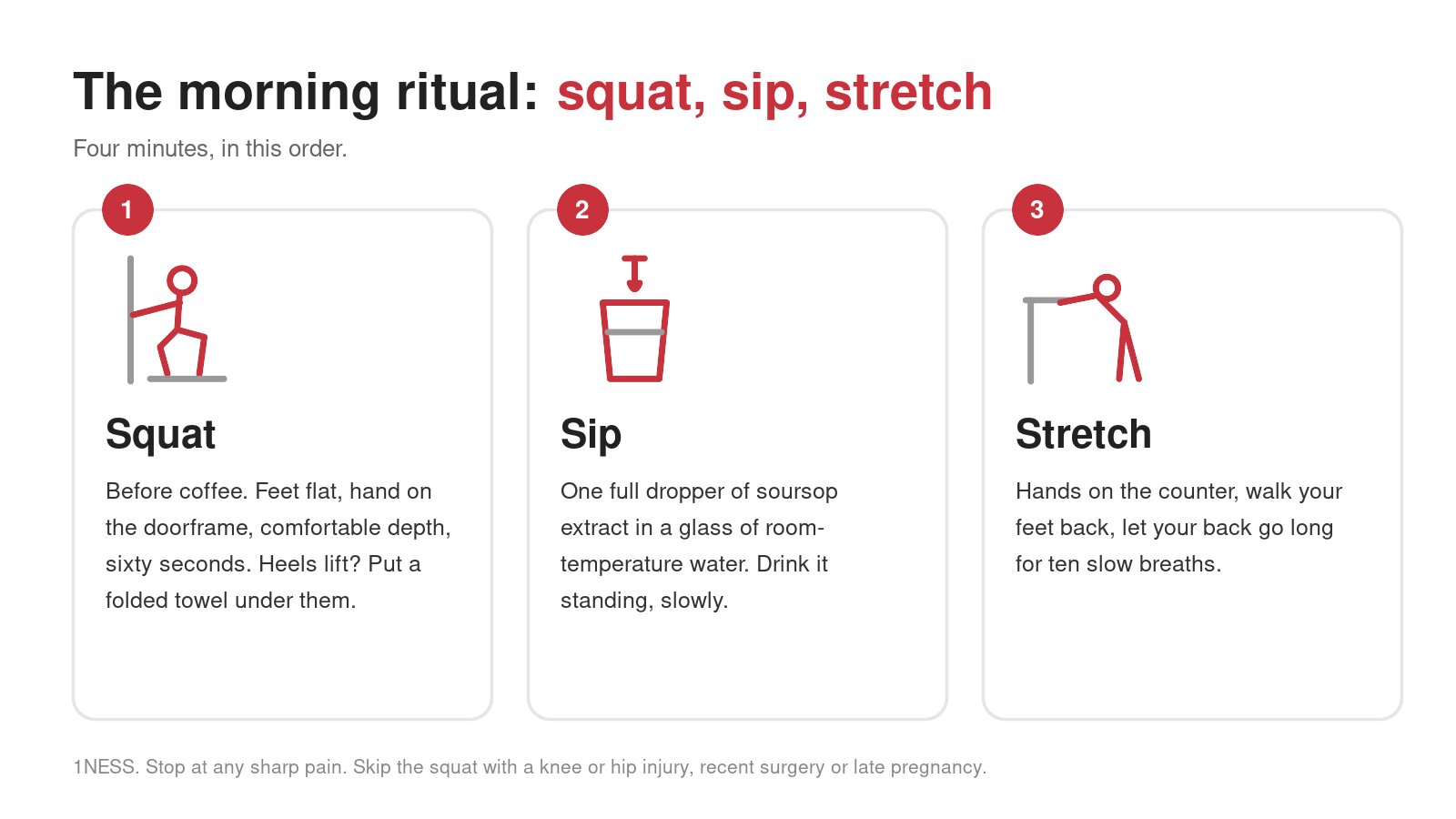
Four minutes, in this order.
- Squat. Before coffee. Feet flat, hand on the doorframe, comfortable depth, sixty seconds. Breathe slowly through the nose.
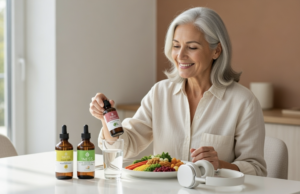
- Sip. One full dropper of soursop extract in a glass of room-temperature water. Drink it standing, slowly.
- Stretch. Hands on the counter, walk your feet back, let your back go long for ten slow breaths. Then go about your morning. Let the body decide when it is ready; do not sit and wait.
Do it six mornings in a row and write three lines a day: how heavy you felt on waking, how many minutes in the bathroom, whether you felt done. By day six your own notes will tell you more than any review can.
Want short answers first? Read Soursop for Gut Health: 11 Questions, Plain Answers.
Get the free 6-Day Soursop Plan
Six mornings written out day by day, with simple shopping-list recipes and where the extract fits in. Email only. No card, no subscription. The plan opens on the page the moment you enter your email.
Send me the 6-Day Soursop Plan
These statements have not been evaluated by the Food and Drug Administration. This product is not intended to diagnose, treat, cure, or prevent any disease. Talk to your doctor before starting any new routine, especially if you have a knee, hip or back injury, are pregnant or nursing, or take medication.
Sources. Sikirov D. Comparison of straining during defecation in three positions. Dig Dis Sci 2003;48(7):1201-1205. Modi RM et al. Implementation of a defecation posture modification device. J Clin Gastroenterol 2019;53(3):216-219, PMC6382038. Rahgoshay N et al. Sitting vs. squatting: a scoping review of toilet postures and associated health outcomes. BMC Public Health 2025;25:2192. FDA Import Alert 31-03, Detention Without Physical Examination of Guanabana (Soursop). USDA APHIS, Federal Register 2024-25085, 89 FR 85935, October 29, 2024. FDA warning letter to Amazing Sour Sop, Inc., Florida District Office, April 17, 2017 (fda.gov, Warning Letters, ref. 512798). FDA, Health Fraud Scams product list, content current as of November 1, 2017 (18 warning letters, more than 80 products).