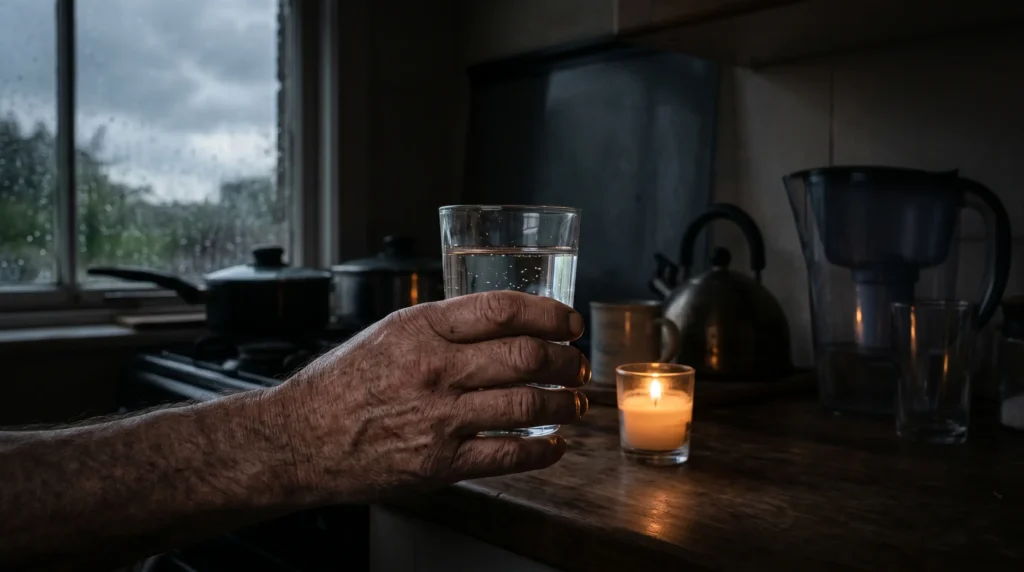
The power has been out for three days. Your tap is running brown. The store shelves emptied before you even got there. Now the only water source within reach is a rain barrel, a nearby creek, or whatever you stored months ago and forgot to rotate.
This is where theory ends and reality begins.
The best water purification method for emergencies is one that works without electricity, handles multiple contaminants (bacteria, viruses, and parasites), and stays reliable when conditions are bad. Among all options, chlorine dioxide stands out as the most effective all-around solution, while boiling and filtration can still be useful in limited situations.
For most real-world emergencies, chlorine dioxide is the most reliable water purification method. It works without power or fuel, handles bacteria, viruses, and parasites (including Cryptosporidium), and scales from a single cup to a full barrel. Boiling, filtration, and tablets each have a role, but each also fails in specific conditions that chlorine dioxide handles.
But the truth is, most methods fail when conditions aren’t ideal.
This guide breaks down what actually works when everything fails – not what sounds good in a prepper video, but what holds up when the fuel runs low, the filter clogs, and the water looks nothing like the clean sample in the instructions.
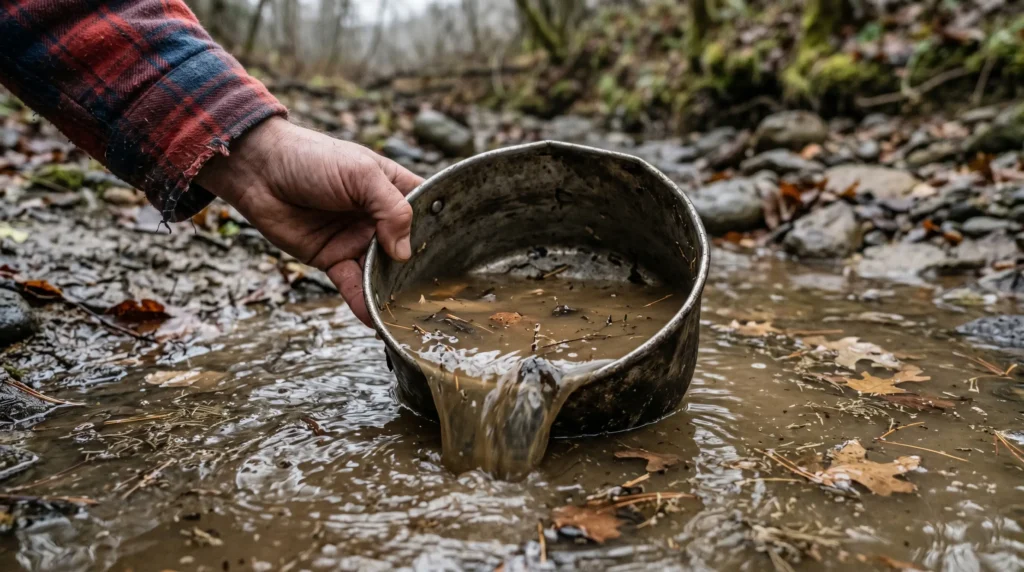
Why Most Emergency Water Purification Advice Falls Short
Most water purification advice is written for controlled conditions. Clear water. Working stove. Plenty of time. A clean kitchen counter.
Real emergencies look nothing like that.
In an actual crisis, you are usually dealing with at least one of these: no electricity, no natural gas, limited fuel, cloudy water, unknown contaminants, injured family members, or a ticking clock before dehydration sets in.
Here is where most advice breaks down in the real world:
Fuel shortages. Boiling sounds simple until your stove runs out of propane on day two.
Equipment failure. Filters clog in muddy water within hours. Pumps break. O-rings crack.
Unknown contaminants. A filter rated for bacteria does nothing against viruses or chemical runoff from a flooded road.
Limited time. Some methods require 30 minutes or more of wait time, which feels like forever when kids are thirsty.
You don’t need theory. You need reliability under pressure.
What Actually Matters in an Emergency Water Purification Method
Before comparing methods, you need a decision framework. Without one, you end up choosing based on what’s trendy instead of what works.
Here is what actually matters when your water supply is compromised:
- Reliability under pressure. Does it still work when you’re tired, stressed, or in the dark?
- Effectiveness across contaminants. Can it handle bacteria, viruses, and parasites – or just one category?
- Independence from power and resources. Does it need electricity, fuel, or replacement parts you might not have?
- Speed vs practicality. Fast methods are great, but not if they sacrifice effectiveness.
- Scalability. Can you treat one cup or five gallons with the same method?
A method that scores well across all five is a method you can trust. A method that wins on speed but fails on contaminant coverage is a backup at best.
Emergency Water Purification Methods Compared (Real-World Performance)
Boiling Water
Strengths: Boiling is one of the oldest methods for a reason. A rolling boil for one minute (three minutes at higher elevations) kills most bacteria, viruses, and parasites. No special equipment required beyond a heat source and a pot.
Limitations: Boiling needs fuel. Lots of it. It’s slow. It does nothing to remove chemicals, heavy metals, pesticides, or fuel runoff. And it doesn’t scale well – try boiling enough water for a family of four for a week and see how quickly your propane disappears.
Verdict: Situational use only. Good for small batches of biologically contaminated water when you have reliable fuel. Not a primary solution.
Water Filtration Systems
Strengths: Filters give you clean-tasting water quickly. Portable models like gravity filters or squeeze filters are great for hiking and short-term use. Most remove bacteria and parasites effectively.
Limitations: Here’s what the marketing rarely tells you. Many popular filters do not remove viruses, which are smaller than most filter pores. Filters clog fast in muddy or sediment-heavy water. Cartridges need replacement. And if you drop one on a rock, it’s done.
Verdict: Helpful but unreliable long-term. A filter is a tool, not a system.
Water Purification Tablets (Chlorine-Based)
Strengths: Lightweight. Dead simple. A small bottle of tablets fits in a pocket and can treat gallons of water.
Limitations: The taste is rough. Effectiveness drops in cold or cloudy water. Wait times can be 30 minutes or longer. And many standard chlorine tablets struggle against resistant parasites like Cryptosporidium.
Verdict: Useful backup option. Good to have, but not your only line of defense.
Chlorine Dioxide (Advanced Emergency Solution)
Strengths: Chlorine dioxide is broad-spectrum. Research suggests it handles bacteria, viruses, and protozoa – including Cryptosporidium, which defeats most standard chlorine tablets. It works in cold water, cloudy water, and across a wide pH range. No electricity. No fuel. Scales from a single bottle to a barrel. Long shelf life when stored properly.
Limitations: It requires correct dosage. It needs wait time (usually 15 to 30 minutes depending on conditions). You have to follow the instructions – no shortcuts.
Verdict: The most reliable method across real emergency conditions. Works when other options break down.
Learn more in our complete guide to chlorine dioxide for drinking water.
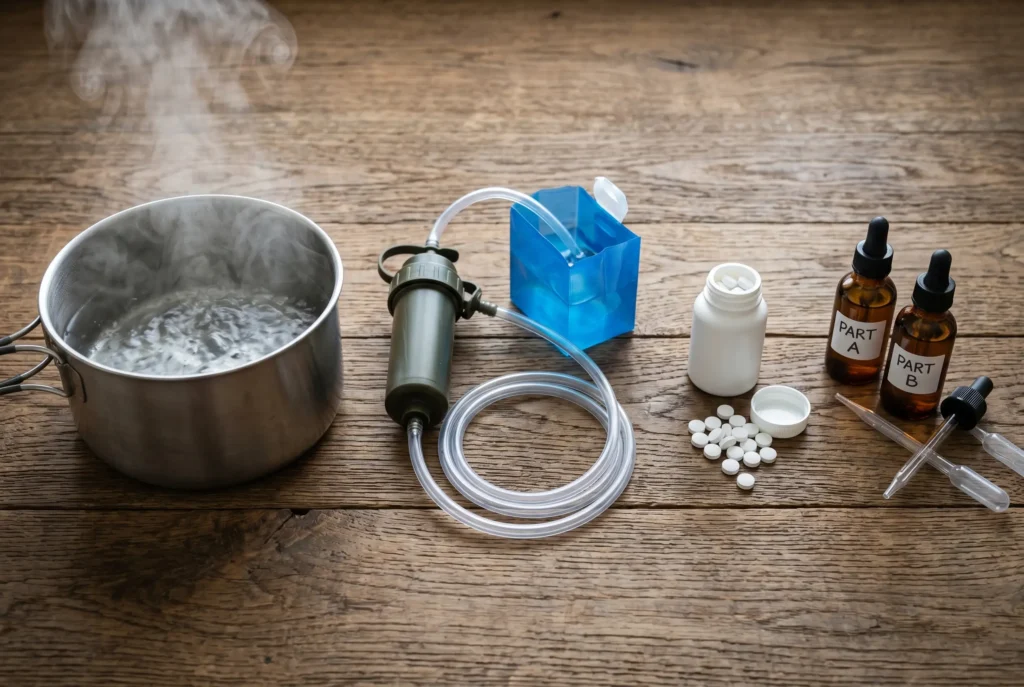
Side-by-Side Comparison Table
| Method | Kills Viruses | Works in Dirty Water | Needs Fuel | Scalable | Reliability in Emergencies |
| Boiling | Yes | Partially | Yes | Poor | Medium |
| Filtration | Often No | No (clogs) | No | Limited | Medium |
| Chlorine Tablets | Yes | Reduced | No | Good | Medium |
| Chlorine Dioxide | Yes | Yes | No | Excellent | High |
The more a method depends on external resources, the more likely it is to fail.
Real-Life Emergency Scenarios (What Actually Works)
Power Outage (No Electricity or Fuel)
A grid-down scenario exposes every weakness in your setup. No electric kettle. No well pump. If your propane runs dry, boiling stops being an option.
Filters work temporarily, but if your source water is dirty, you’ll burn through cartridges fast. Chemical methods dominate here because they don’t care whether the lights are on.
Flood or Contaminated Water Source
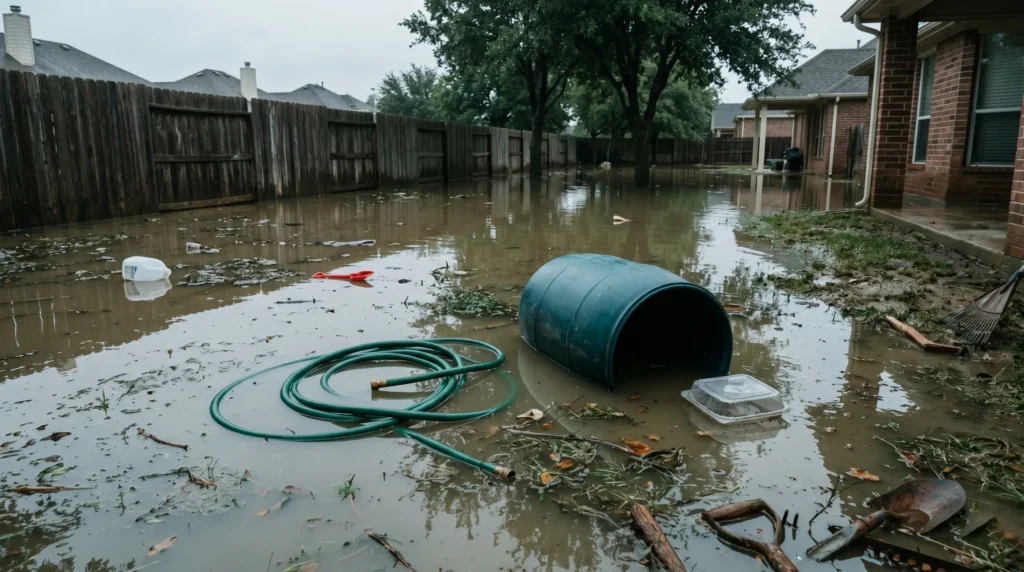
Floodwater is not just biologically dirty. It carries fuel, sewage, pesticides, and industrial runoff. Filters clog within hours. Boiling kills the bugs but leaves chemicals behind.
You need broad-spectrum purification paired with pre-filtering to remove debris. This is where chlorine dioxide earns its reputation.
Remote Survival or Hiking Emergency
Weight matters. Speed matters. You’re not carrying a five-gallon pot up a ridge.
Portable chemical solutions, tablets or liquid chlorine dioxide drops – win here. They weigh almost nothing, treat enough water for days, and work in any water source you find.
Long-Term Emergency (System Failure)
When the emergency stretches from days into weeks, single-method dependency fails. Filter cartridges run out. Fuel runs out. Patience runs out.
Flexible, scalable solutions perform best. A purification method that works equally well on a cup, a pitcher, or a stored barrel gives you options others don’t have.
For more on extending your supply, see our long-term water storage guide.
Which Water Purification Method Actually Works When Everything Fails?
Let’s be honest about this. Every method has a ceiling.
Boiling wins on simplicity but loses on fuel and chemical contaminants. Filtration is fast but fails on viruses and muddy water. Tablets are portable but slow and limited.
Chlorine dioxide isn’t perfect either. Dosage needs to be measured. Contact time has to be respected. Storage matters. Skip any of those and the method loses its edge.
But when you stack it against real-world emergency conditions – contaminated water, no power, unknown pathogens, long timelines – it’s the most adaptable and dependable tool in the kit.
The right answer isn’t “pick one method.” It’s “make chlorine dioxide your primary and keep the others as backups.”
How to Purify Water in an Emergency (Step-by-Step Guide)
- Assess your water source. Look at it. Smell it. Is it cloudy, smelly, oily? Note any signs of chemical contamination.
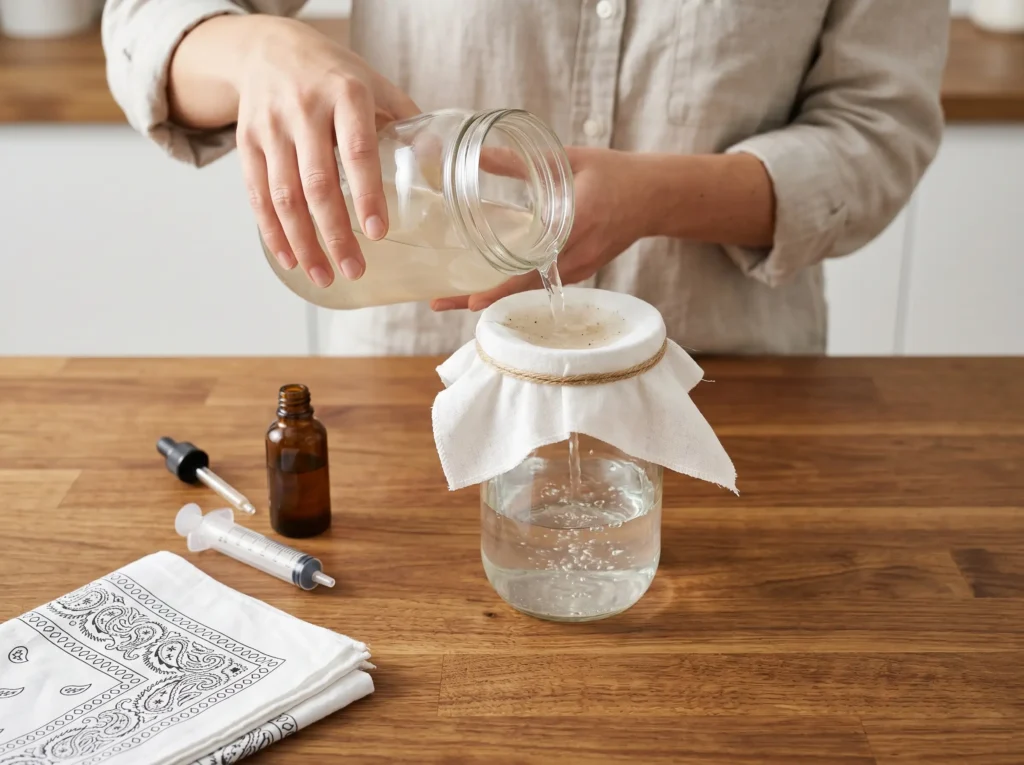
- Pre-filter debris. Use a clean cloth, coffee filter, or bandana to strain out visible particles. This step is critical for every method that follows.
- Choose your method. For most emergency conditions, chlorine dioxide is the strongest choice. Have tablets or filtration as backup.
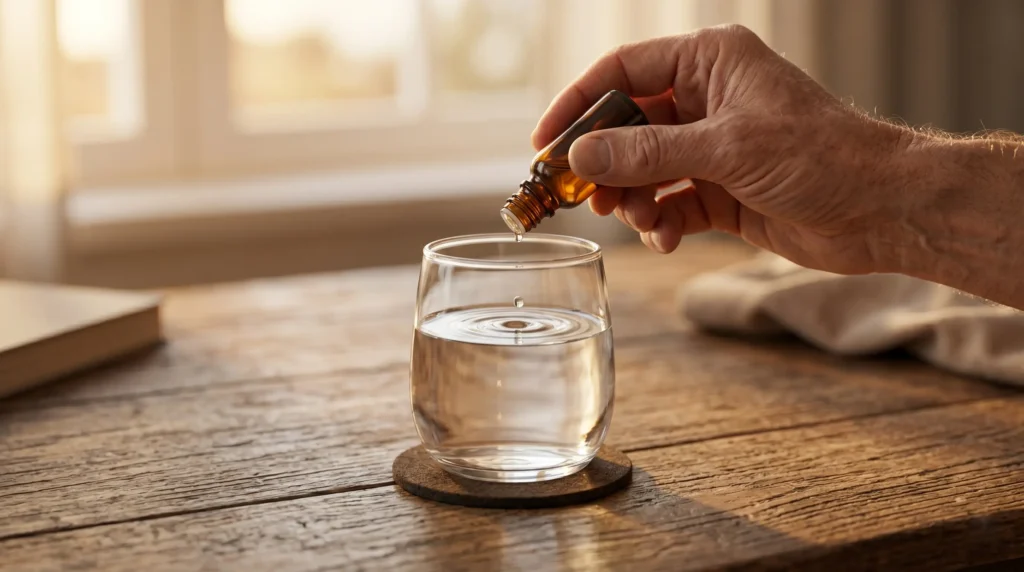
- Apply correctly. Follow dosage instructions exactly. More is not better. Less doesn’t work.
- Wait for the full contact time. This is where most people fail. Set a timer. Don’t drink early.
- Store safely. Use clean, sealed containers. Keep treated water away from contaminated surfaces.
For extremely dirty water: Pre-filter twice. Let sediment settle for 30 minutes before treating. Then double the contact time recommended on your purification product.
Common Mistakes That Can Make Water Unsafe
- Assuming clear water is safe. Pathogens are invisible. Clear water can still be lethal.
- Incorrect dosage. Underdosing leaves pathogens alive. Overdosing wastes product and affects taste.
- Skipping wait time. The chemistry needs minutes to finish the job. Cutting it short defeats the whole process.
- Relying on one method. Single points of failure are how emergencies become disasters.
- Poor storage. Treated water recontaminates fast in dirty containers or open jugs.
Emergency Water Preparation Checklist
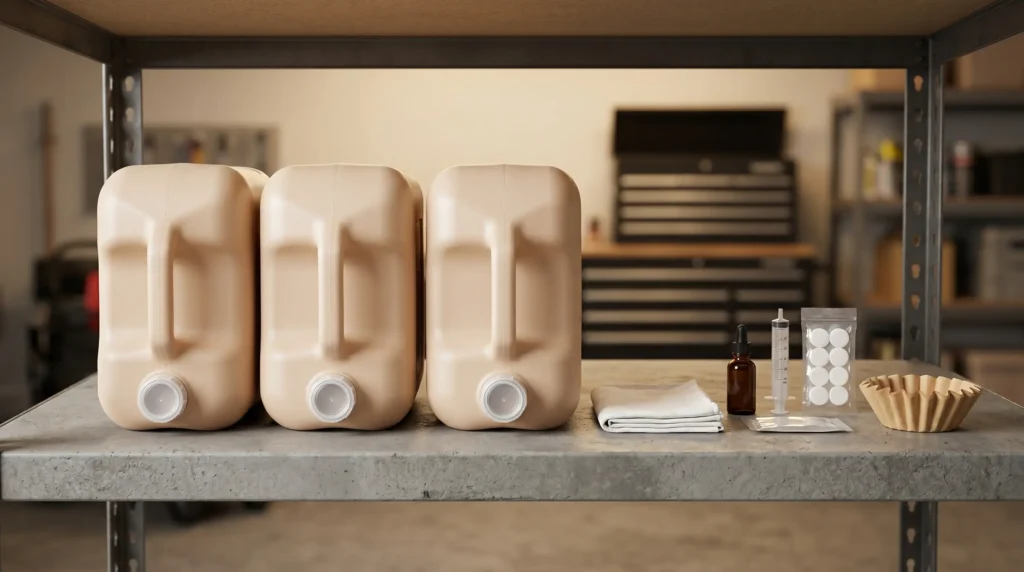
- Primary purification method (chlorine dioxide kit)
- Backup method (tablets or portable filter)
- Pre-filter material (cloth, coffee filters)
- Clean storage containers with tight lids
- Measuring dropper or syringe for dosing
- Written instructions in case you’re stressed
- Knowledge of your local water risks (wells, municipal supply, flood zones)
- A family plan so everyone knows what to do
Preparation isn’t paranoia. It’s what separates people who handle emergencies from people who are handled by them.
Key Takeaways
- The best water purification method for emergencies must work without electricity and handle bacteria, viruses, and parasites
- Boiling is reliable but needs fuel and doesn’t remove chemicals
- Filters are fast but often miss viruses and clog in dirty water
- Tablets are useful as a backup but slow and limited against tough parasites
- Chlorine dioxide is the most adaptable method across real emergency conditions
- A complete plan uses one primary method and one backup, plus a pre-filter and clean storage
Frequently Asked Questions
A method that removes bacteria, viruses, and parasites without relying on electricity – such as chlorine dioxide – is generally the safest. It works across different water conditions and doesn’t need fuel or power.
Boiling kills most pathogens but does not remove chemicals, heavy metals, or fuel contamination. In floods or chemical spills, boiling alone leaves the water unsafe.
Filters give you immediate results but often miss viruses and clog in dirty water. Tablets disinfect more broadly but need wait time. Each has trade-offs depending on the situation.
Most chemical methods take 15 to 30 minutes. Cold or cloudy water extends the wait. Always follow the product’s specific instructions.
Yes, but pre-filter it first to remove debris and sediment. Then apply your purification method and extend the contact time if needed.
Final Thoughts: Preparation Is What Makes the Difference
Emergencies expose weak systems. The filter you never tested. The tablets that expired two years ago. The propane tank you meant to refill.
Reliable methods beat popular ones every time. The goal isn’t to own every tool on the market. It’s to own a few tools that actually work when nothing else does.
Chlorine dioxide belongs in that category. It’s not flashy. It doesn’t need batteries. It just works – in the dark, in the cold, in the chaos.
If you want to go deeper on how chlorine dioxide works and how to use it correctly, start with the complete guide to chlorine dioxide for drinking water. It covers dosage, safety, and real-world application.
And when you’re ready to build out your emergency water kit, the chlorine dioxide water purification drops are a practical starting point – small enough to store, strong enough to trust.
When you choose the best water purification method for emergencies, you’re not just buying peace of mind. You’re buying back control of a situation most people hand over by default.
The time to prepare is before you need it. Not after.