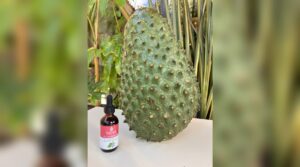
Over 174,000 people typed “soursop” into Google last month, not “banana” or “avocado,” but soursop.
A spiky, green, tropical fruit that most Americans couldn’t even identify in a lineup two years ago.
So what changed?
Why are tens of thousands of people suddenly curious about soursop benefits, soursop tea, and soursop bitters all at the same time?
Short answer: people are waking up.
They’re searching for natural alternatives, and the data is showing it in real time.
The soursop bitters market alone is projected to grow from $142 million in 2025 to over $202 million by 2030.
That’s not a fad.
That’s a movement.
Let’s break down what’s actually driving this, what soursop can and can’t do, and why you might want to start paying attention before everyone else catches on.
What Even Is Soursop? A Quick Primer
If you’re brand new here, no worries.
Soursop (Annona muricata) goes by a bunch of names depending on where you are in the world.
Guanábana in México.
Graviola in Brazil.
Guyabano in the Philippines.
Same fruit. Many names.
It grows across tropical regions of Central and South America, Southeast Asia, and parts of Africa.
On the outside, it looks like an oversized avocado covered in soft spikes.
On the inside, creamy white flesh with a sweet tart flavor people compare to a mix of strawberry, pineapple, and apple.
Pretty unique taste.
But flavor isn’t why 174,000 people are Googling it.
The real interest is in what this fruit might do for your body.

The Soursop Benefits Driving the Search Surge
Here’s the thing about soursop benefits.
They’re not just internet hype.
There’s actual research behind this.
Not all of it is conclusive yet, and we’ll be honest about that.
But what’s been found so far is turning heads in the wellness community.
Loaded With Antioxidants and Vitamin C
One cup of soursop gives you about 52 percent of your daily Vitamin C.
That alone puts it in the same conversation as oranges and kiwi.
What really makes it stand out are the unique bioactive compounds.
Acetogenins.
Flavonoids.
Phenolic compounds.
A peer reviewed paper in the journal Molecules confirmed that soursop contains over 100 acetogenins that researchers are actively studying for antioxidant properties.
Digestive Health and Fiber
One cup of soursop packs about 7.4 grams of fiber.
That’s roughly 26 percent of your daily needs.
It contains both soluble and insoluble fiber, which supports regularity and blood sugar balance.
A registered dietitian at Cleveland Clinic noted that a cup of soursop daily can meaningfully help people reach fiber targets.
Blood Pressure Support
This one surprised a lot of people.
A clinical study found that participants who drank 7 ounces of soursop juice daily for three months showed measurably lower blood pressure compared to the control group.
That’s a human study, not just a lab test.
Considering nearly half of US adults deal with high blood pressure, you can see why interest is rising.
Antibacterial Properties
Lab studies show soursop extracts may help fight bacteria linked to tooth decay, gingivitis, and certain yeast infections.
These findings are still at an early stage, but they’re strong enough that researchers keep investigating.
Bottom line: the soursop benefits aren’t folklore.
They’re backed by a growing body of research that aligns with centuries of traditional use.
Why Soursop Tea and Soursop Bitters Are Trending Separately
It’s not just “soursop” people are searching.
The terms soursop tea and soursop bitters are climbing on their own.
Soursop tea, made from dried soursop leaves, is one of the most popular ways people consume the plant.
It’s easy to brew.
It has a mild earthy taste.
It’s been used in traditional herbal medicine for generations.
People drink it for relaxation, digestive comfort, and general wellness support.
Soursop bitters are more concentrated herbal extracts.
They’re gaining traction among people familiar with Caribbean and Latin American traditions where bitters are used as health tonics.
Market data shows the soursop bitters market is growing at a compound annual growth rate of 5.58 percent and is projected to pass $200 million globally by 2030.
That signals long term demand, not a short lived trend.
Soursop Leaves: The Part Most People Overlook
Most attention goes to the fruit itself.
But here’s what many miss.
A large portion of research on graviola benefits actually focuses on the leaves.
Soursop leaves contain higher concentrations of acetogenins than the fruit.
They’re also where much of the antibacterial and antioxidant research is concentrated.
That’s why soursop leaf tea and soursop leaf extracts have their own growing search demand.
If you’ve only thought about soursop as a fruit, you’re missing the bigger picture.
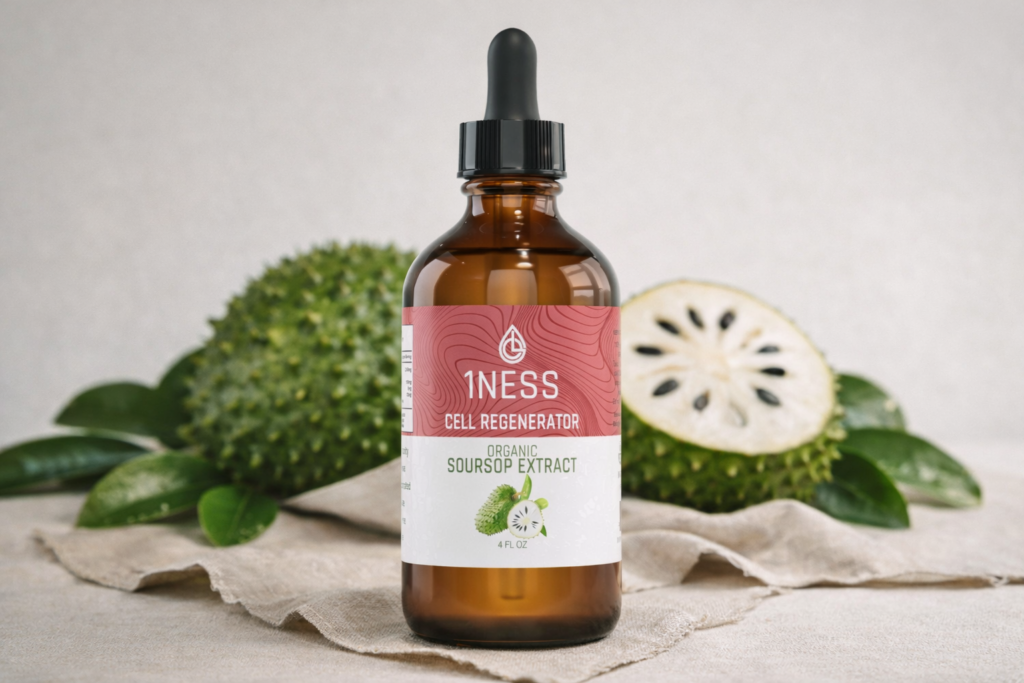
We actually carry a soursop extract designed specifically for this purpose.
You can view it here.
What You Should Know Before Trying Soursop
We’re not pretending soursop is perfect.
Here are a few important considerations.
If you take blood pressure or diabetes medication, talk to your doctor first.
Soursop may amplify the effects of those drugs.
Some studies associate very long term, high dose use with neurological concerns in specific populations.
The takeaway is moderation.
Cycle usage.
Don’t treat it like water.
Quality also matters.
Where it’s grown.
How it’s processed.
Whether it’s organic.
That’s one reason sourcing standards matter so much at 1Ness.
If you want clarity on legality, we wrote a full breakdown on that topic.
The Bigger Picture: Why This Search Trend Matters
174,000 monthly searches for a single tropical fruit signals something bigger.
People are done waiting for permission to explore natural health.
The US organic retail market reached $52 billion.
Healthcare spending hit $4.9 trillion in 2023.
People are spending more on health, and increasingly on things they can control.
Whole Foods.
Herbal supplements.
Traditional preparations.
Soursop fits that shift perfectly.
It’s not synthetic.
And, not owned by pharma.
It’s been used for centuries.
Now the data is catching up.
That’s not a trend.
That’s a correction.
Ready to See What the Buzz Is About?
If you’ve been curious about soursop, now’s the time.
We carry organic soursop tea, bitters, and leaf extracts sourced with strict quality standards.
Browse the full soursop collection.
Subscribe for updates at www.be1ness.com.
Download the Ultimate Chlorine Dioxide Uses guide at www.cdguide.be1ness.com.
Soursop FAQ: Your Questions Answered
What are the main soursop benefits?
Soursop is rich in Vitamin C, fiber, and acetogenins. Research suggests digestive, antioxidant, and blood pressure support, though most studies are still in their early stage.
Is soursop tea safe to drink every day?
Moderate daily use is generally considered safe. Many experts recommend cycling intake rather than continuous long term use.
Why is soursop trending right now?
Rising interest in natural health, social media exposure, and increasing research on graviola benefits are driving search growth.
What’s the difference between soursop tea and soursop bitters?
Tea is brewed from dried leaves for mild daily use. Bitters are concentrated extracts traditionally used as tonics.
Are soursop leaves better than the fruit?
They’re different. The fruit offers Vitamin C and fiber, while leaves contain higher acetogenin concentrations.
Is soursop illegal in the US?
No. Soursop products like tea, bitters, and extracts are legal and widely available.
Where can I buy high quality soursop products?
You can find organic soursop products at shop1ness.com/collections/soursop.