What is Chlorine Dioxide?
At 1NESS®, we believe clean water and safe environments should be accessible to everyone. That’s why we specialize in high-quality chlorine dioxide water purification kits and education around this powerful solution.
Chlorine dioxide (ClO₂) is one of the most powerful yet often misunderstood compounds in modern sanitation and water treatment. At first glance, it sounds similar to “chlorine bleach,” but in reality, it is a completely different chemical with distinct properties, applications, and safety advantages. Unlike chlorine gas (Cl2) or bleach, chlorine dioxide is a selective oxidizer. It causes fewer unwanted reactions.
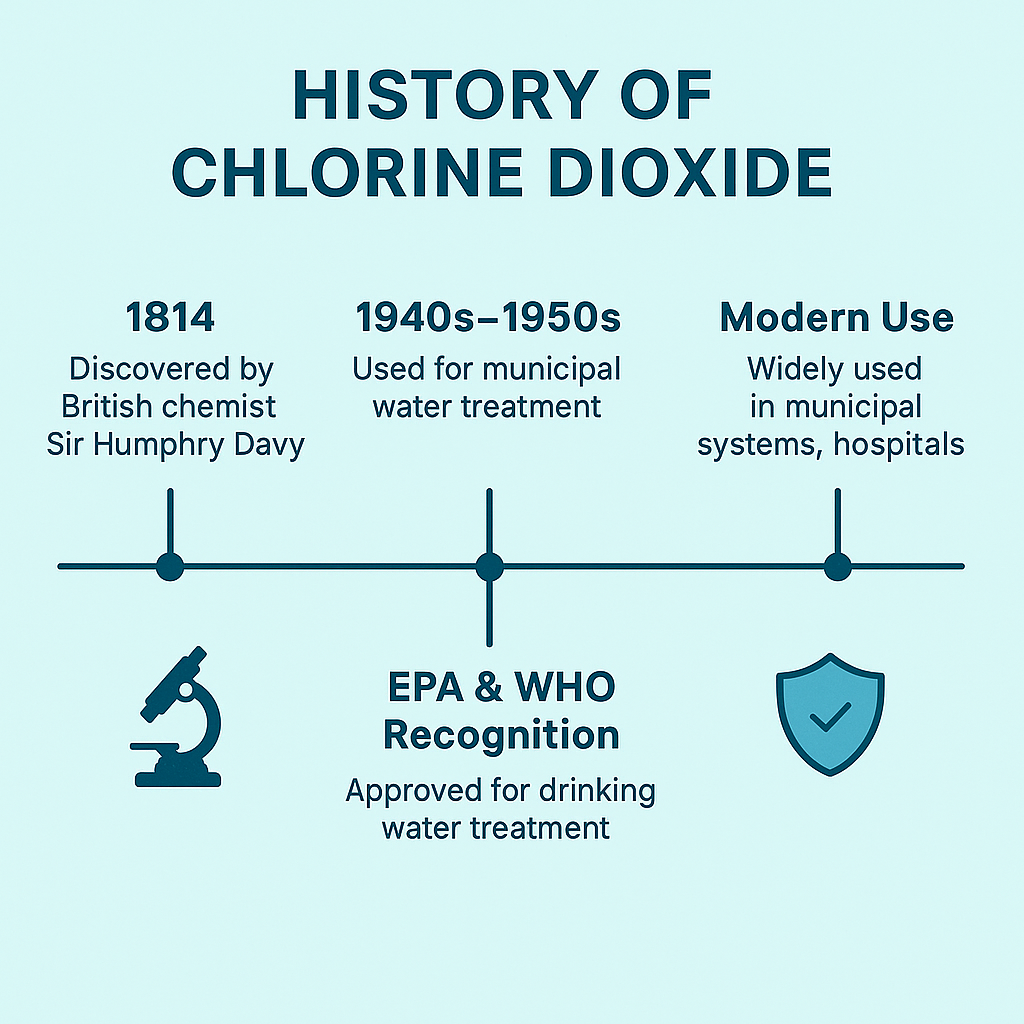
History of Chlorine Dioxide
Chlorine dioxide was first discovered in 1814 by British chemist Sir Humphry Davy. Initially, it was seen as a scientific curiosity, but by the mid-20th century, industries began to recognize its true potential.
- 1940s to 1950s: US and European cities started using chlorine dioxide to treat municipal water.
- Chlorine dioxide is used by many public water systems to treat drinking water.
- Modern Use: Today, it is widely used in municipal systems, hospitals, food processing plants, and household purification kits for travelers and survivalists.
Chemical Properties
To understand why chlorine dioxide is so effective, it helps to look at its chemical profile:
- Formula: ClO₂
- State: Gas at room temperature (usually generated fresh on-site)
- Color: Yellow-green
- Solubility: Highly soluble in cold water
- Oxidation potential: 0.95 volts, lower than ozone and higher than chlorine.
- Selective oxidation: reacts with organic matter and odor compounds, not with everything in the water.
This makes chlorine dioxide both powerful and controllable compared to chlorine or bleach.
Why Chlorine Dioxide is Different from Chlorine Bleach
A common misconception is that chlorine dioxide is “just another form of bleach.” In reality, their differences are critical:
- Chlorine Bleach (Sodium Hypochlorite): Strongly reactive, leaves toxic byproducts (THMs, HAAs), alters water taste and smell.
- Chlorine Gas (Cl₂): Corrosive, unstable, and dangerous to handle.
- Chlorine Dioxide (ClO₂): Selective, effective at low concentrations, leaves no carcinogenic residues, and breaks down into harmless salts.
In simple terms: chlorine dioxide treats water without the bleach taste and smell.
Regulatory Approvals
The global acceptance of chlorine dioxide highlights its credibility:
- United States: used by municipal water systems to treat drinking water, within a federal limit of 0.8 mg/L in finished water.
- Worldwide: chlorine dioxide appears in international drinking water guidelines as a water treatment chemical.
- Food industry: chlorine dioxide is also used in food processing plants.
Q: What is chlorine dioxide used for?
A: Chlorine dioxide is used by many public water systems to treat drinking water.
How Chlorine Dioxide Works
At 1NESS®, we provide trusted chlorine dioxide purification kits because the science behind ClO₂ is both simple and powerful. To understand why chlorine dioxide (ClO₂) is used worldwide, from municipal water plants to camping kits. You need to see how it works at the molecular level.
To understand why chlorine dioxide (ClO₂) is trusted worldwide, you need to know how it works at the molecular level. Unlike chlorine bleach, which reacts with almost everything it touches, chlorine dioxide is a selective oxidizer. That means it acts on odor causing compounds without creating dangerous byproducts.
This unique mechanism explains why chlorine dioxide is used in municipal water plants, hospitals, food sanitation, and even camping water kits.
The Science of Selective Oxidation
Most treatments rely on brute force reactions. Chlorine dioxide, however, is smarter:
- Eliminates VOCs (Volatile Organic Compounds): These are the chemical sources of bad odors. ClO₂ oxidizes them at the molecular level, removing smells instead of masking them.
Why Chlorine Dioxide Outperforms Chlorine & Iodine
Not all water treatments are equal. Here’s why chlorine dioxide stands apart:
- Chlorine Bleach (Sodium Hypochlorite):
❌ Overly reactive, produces toxic byproducts (THMs & HAAs), leaves chemical taste in water. - Chlorine Gas (Cl₂):
❌ Highly corrosive and dangerous to handle, requires special storage. - Iodine Tablets:
❌ Slow to act, leave water with a bitter taste, and less effective against Cryptosporidium. - Chlorine Dioxide (ClO2):
selective, reacts with odor compounds and organic matter.
Safe — leaves behind harmless salts and oxygen-based compounds.
Clean — no unpleasant aftertaste or discoloration in drinking water.
Fast-Acting & Broad-Spectrum Protection
Chlorine dioxide is effective even at very low concentrations (0.1–1 ppm). This is why public water systems have used it to treat drinking water for decades.
- Timeframe: most treatment happens in under 30 minutes.
- Spectrum: works on water and odors.
- Efficiency: Leaves water tasting clean, unlike iodine or chlorine-based treatments.
This speed and broad-spectrum effectiveness make it the go-to choice for emergency preparedness, international travel, and outdoor survival kits.
Real-World Example: Odor Control
Imagine a basement with a musty smell. Air fresheners will only cover the smell. Chlorine dioxide, on the other hand, penetrates air and surfaces as a fine vapor (especially when used with an aerator/bubbler).
- Removes odors from rooms, cars and enclosed spaces.
- Result: Odors are destroyed at the source, leaving the space genuinely clean.
Applications include:
- Hotels removing cigarette smoke
- RV interiors cleared of mildew
- Industrial plants reducing chemical waste odors
Q: How does chlorine dioxide work?
A: Chlorine dioxide is a selective oxidizer. It reacts with odor compounds and organic matter, not with everything around it. It leaves no harmful residue, which makes it cleaner than bleach or iodine.
Top Uses of Chlorine Dioxide
Chlorine dioxide (ClO₂) is used in municipal water plants, food factories and households. It treats water and removes odors without leaving residue. That makes it one of the most versatile tools around.
At 1NESS®, we provide advanced chlorine dioxide purification kits and odor-control solutions so that consumers, businesses, and institutions can access the same science trusted globally.
Below are the five most important applications of chlorine dioxide today.
1. Water Purification & Drinking Water Safety
Safe drinking water is the #1 reason people turn to chlorine dioxide.
- Municipal Treatment: Since the 1950s, U.S. and European cities have used ClO₂ instead of chlorine to treat drinking water.
- Emergency Preparedness: We recommend 5 drops of Part A and 5 drops of Part B per US gallon of water. This is our own recommendation from our own testing.
- Humanitarian Aid: aid workers use chlorine dioxide after natural disasters to treat large amounts of water quickly.
Q: Is chlorine dioxide safe for drinking water?
A: Chlorine dioxide is used by many public water systems to treat drinking water.
2. Odor Removal & Mold Control
One of the unique superpowers of chlorine dioxide is its ability to eliminate odors at the source.
- Homes and basements: musty odors come from volatile organic compounds (VOCs). ClO₂ oxidizes them, breaking molecules apart instead of covering them up with fragrance.
- Hospitality & RVs: Hotels use ClO₂ to neutralize cigarette smoke and pet odors. RV owners rely on it to keep interiors fresh and mildew-free.
- Industrial: warehouses, gyms and wastewater plants use aerators to spread ClO2 gas for wide area odor control.
Q: Can chlorine dioxide remove strong odors like smoke or musty smells?
A: Yes. Unlike air fresheners, chlorine dioxide destroys odor-causing compounds at the molecular level, making it highly effective for smoke, mildew, and chemical odors.
3. Food & Beverage Industry
Chlorine dioxide is used by many public water systems to treat drinking water.
- Produce Wash: food plants rinse fresh fruits and vegetables in low-level ClO₂ water without affecting taste or color.
- Poultry and seafood: used in wash water for carcasses and equipment.
- Breweries, dairies and bottling plants use ClO2 to clean the inside of water lines.
Q: Why is chlorine dioxide used in food processing?
A: It leaves no chemical residue and does not change taste. That suits produce, poultry and seafood wash water.
4. Healthcare & Medical Sanitation
Q: Is chlorine dioxide used in hospitals?
A: Yes.
5. Industrial & Environmental Uses
Beyond homes and hospitals, chlorine dioxide is a workhorse chemical for industry.
- Wastewater Treatment: Reduces BOD (Biological Oxygen Demand) and COD (Chemical Oxygen Demand) in municipal and industrial wastewater.
- Paper & Pulp Industry: Replaces chlorine in paper bleaching, preventing the formation of dioxins (toxic byproducts).
- Cooling Towers: Prevents biofilm buildup in manufacturing facilities, reducing downtime and improving efficiency.
Q: What industries use chlorine dioxide?
A: Major industries include wastewater treatment, paper and pulp bleaching, and industrial cooling systems.
Quick Recap of Where Chlorine Dioxide Wins
- Water safety (municipal, survival, emergency)
- Odor removal (homes, hotels, RVs, gyms)
- Food & beverage sanitation (produce, poultry, seafood)
- Industrial/environmental cleaning (wastewater, paper, biofilm control)
Benefits of Chlorine Dioxide
When it comes to water treatment, not all chemicals are equal. Traditional solutions like chlorine bleach, ozone, or iodine are effective but come with major drawbacks: toxic byproducts, corrosiveness, bad taste, or unstable performance.
Chlorine dioxide (ClO₂) solves all of these problems. That is why municipal systems, industries and emergency kits use it, and why 1NESS® built its water treatment kits around it.
1. No Harmful Byproducts
One of the most important advantages of chlorine dioxide is that it doesn’t create toxic byproducts.
- Chlorine bleach forms carcinogenic trihalomethanes (THMs) and haloacetic acids (HAAs) when it reacts with organic matter.
- Ozone can produce irritating byproducts and is unstable in real-world use.
- Chlorine dioxide breaks down into simple salts after it does its work in the water.
Q: Does chlorine dioxide leave harmful residues?
A: No. When used properly, chlorine dioxide leaves only trace salts and oxygen compounds, making it far safer than chlorine or bleach.
2. Works at Lower Concentrations
Chlorine dioxide is powerful even at low doses, which means less chemical use and safer applications.
- Effective at just 0.1 to 1 ppm (parts per million).
- Reduces the risk of overuse compared to bleach or chlorine gas.
- Cost-efficient for both municipal systems and consumer water purification kits.
3. Fast Acting
Speed matters, especially in healthcare, travel, or emergencies.
- Treats water in minutes.
- Use the drops to treat your drinking water; it is ready in as little as 30 minutes.
- Faster than iodine tablets (which leave a bitter taste and take longer to work).
4. Versatile Applications
Chlorine dioxide is one of the most adaptable water treatment chemicals there is.
- Scales from treating a single gallon of water on a camping trip to millions of gallons in city water plants.
- Used in food safety, hospitals, odor control, industrial plants, and disaster relief.
- Can be applied as liquid, vapor, or gas depending on the need.
5. Non-Corrosive in Proper Use
While chlorine gas corrodes pipes, metals, and equipment, chlorine dioxide is gentler on infrastructure when dosed properly.
- Safe for food contact surfaces like stainless steel.
- Suitable for medical instruments and hospital equipment.
- Helps industries extend the lifespan of their systems while maintaining top sanitation standards.
Quick Recap of Benefits
- Leaves no carcinogenic byproducts
- Works at very low concentrations
- Fast acting water treatment
- Scales from households to industries
- Safer on infrastructure & equipment
How to Use Chlorine Dioxide Safely with 1NESS® Kits
At 1NESS®, we believe clean water and safe environments should never be out of reach. That is why our chlorine dioxide kits are designed to make treating water simple, whether you are at home, on the trail, or preparing for emergencies. Chlorine dioxide is powerful, but when paired with our carefully sourced two-part solutions, it becomes one of the most dependable purification tools you can carry.
Step 1: Understand the Two-Part System
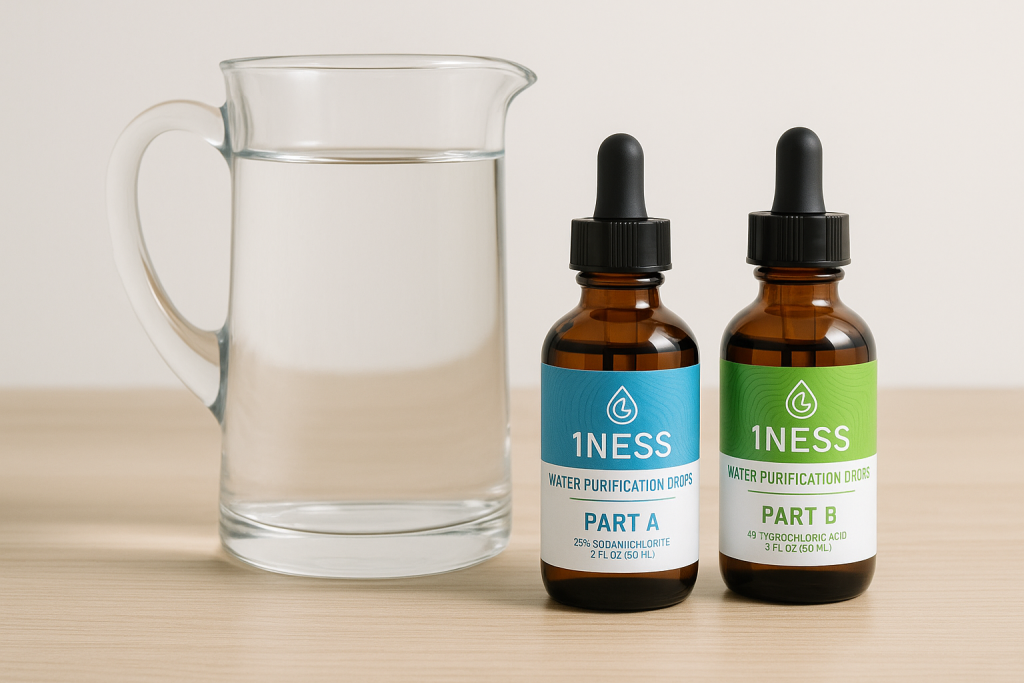
Every 1NESS® Chlorine Dioxide Water Purification Kit comes with the essential two-part system:
- Part A: 28% Sodium Chlorite Solution
- Both activators make the same chlorine dioxide at the same dose. Citric acid (50%) is the classic, plant-derived option. Hydrochloric acid (4%) has a more neutral taste and activates a little faster. Choose by taste.
Mixing these components generates chlorine dioxide instantly. Because we use distilled water and high-quality ingredients sourced from Mexico, you get unmatched consistency and safety compared to cheaper, diluted alternatives.
Step 2: Basic Dosage for Water Purification
Using your 1NESS kit for safe drinking water is simple:
- For a smaller container, use 1 drop of Part A and 1 drop of Part B per about 25 oz (750 mL) of water. Same strength as 5 + 5 per gallon.
- Mix Part A and Part B in a clean, dry glass, swirl gently and wait 1 minute until it turns amber. Then add it to your water.
- Add the mixture to 1 gallon of water.
- Wait 30 minutes for contact time before drinking.
With 1NESS kits, you treat your own water.
Step 3: Odor Control
Removes odors from rooms, cars and enclosed spaces.
- Add the tablet to water and use a 1NESS bubbler device for dispersion.
- ClO2 vapor spreads evenly and breaks down odor causing compounds.
- Ideal for basements, RVs, hotels, gyms, or industrial sites.
Step 4: Safety Rules
To maximize effectiveness and safety:
- Never drink concentrated solutions, always dilute first.
- Use glass or BPA-free containers (avoid metals).
- Store your kit in cool, dark places, our amber glass bottles protect freshness.
- Keep out of reach of children and pets.
FAQs
Q: Can I use this daily for drinking water?
A: Yes. Millions of people worldwide drink water treated with chlorine dioxide. Our dose, 5 drops of each part per gallon, is our own recommendation from our own testing.
Q: Does it leave a taste in water?
A: No. With 1NESS, water tastes fresh and clean, unlike iodine or bleach tablets.
Q: Why choose 1NESS over cheaper brands?
A: Because we use distilled water, volcanic-sourced acids, and food-safe glass bottles, never fungus-based citric acid or diluted tap water.
Q: Is it safe on food and surfaces?
A: Yes. Properly diluted chlorine dioxide is non-corrosive and safe for kitchens, medical tools, and household use.
Final Takeaway
1NESS® Chlorine Dioxide Kits treat water for:
- Camping & Hiking
- Emergency Preparedness
- Home & Travel Use
- Odor Removal
Explore our full range of 1NESS Chlorine Dioxide Water Purification Kits and experience peace of mind knowing you have clean water and safe spaces anywhere life takes you.